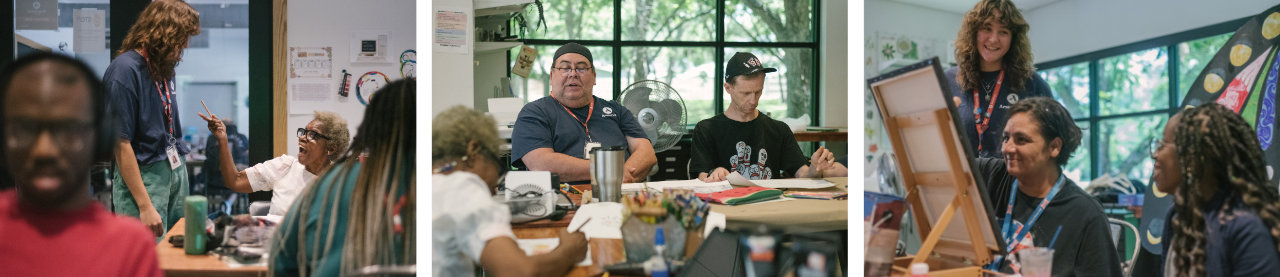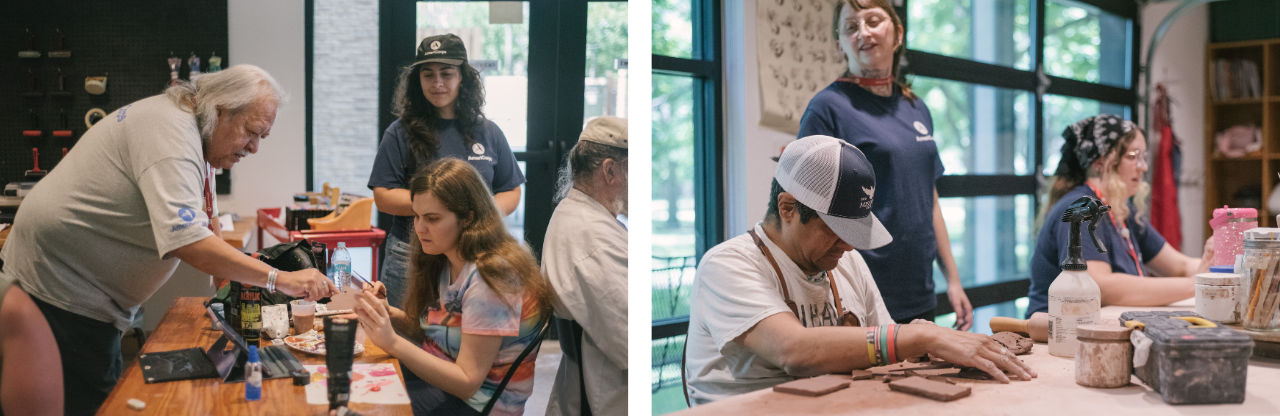
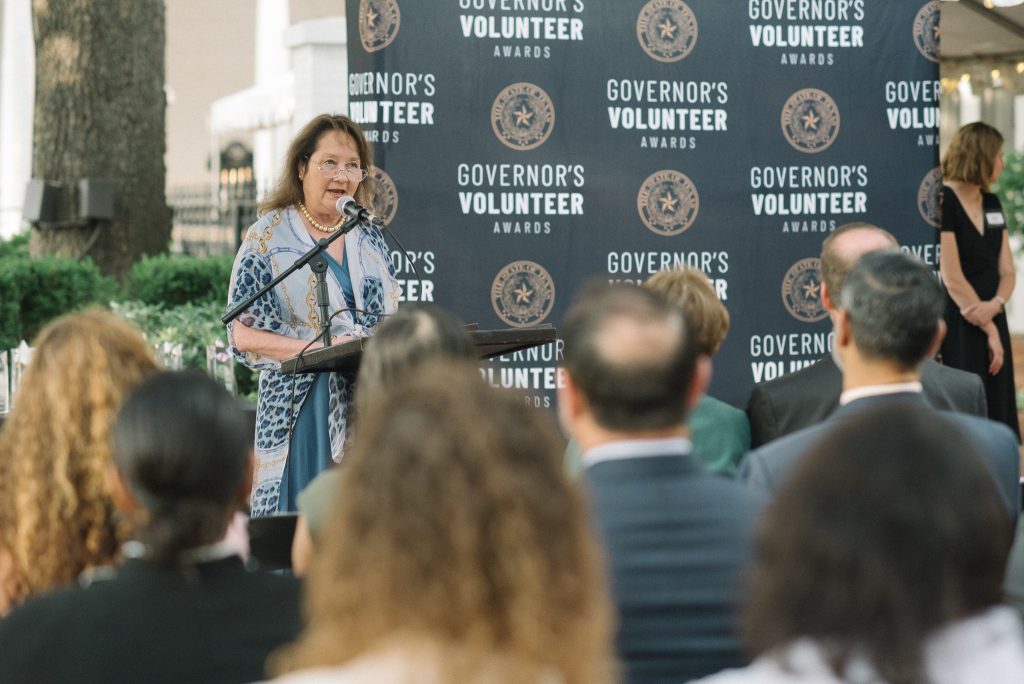
First Lady Cecilia Abbott, OneStar Foundation Announce Recipients Of The 42nd Annual Governor’s Volunteer Awards

This press release was originally posted here by The Office of the Texas Governor.

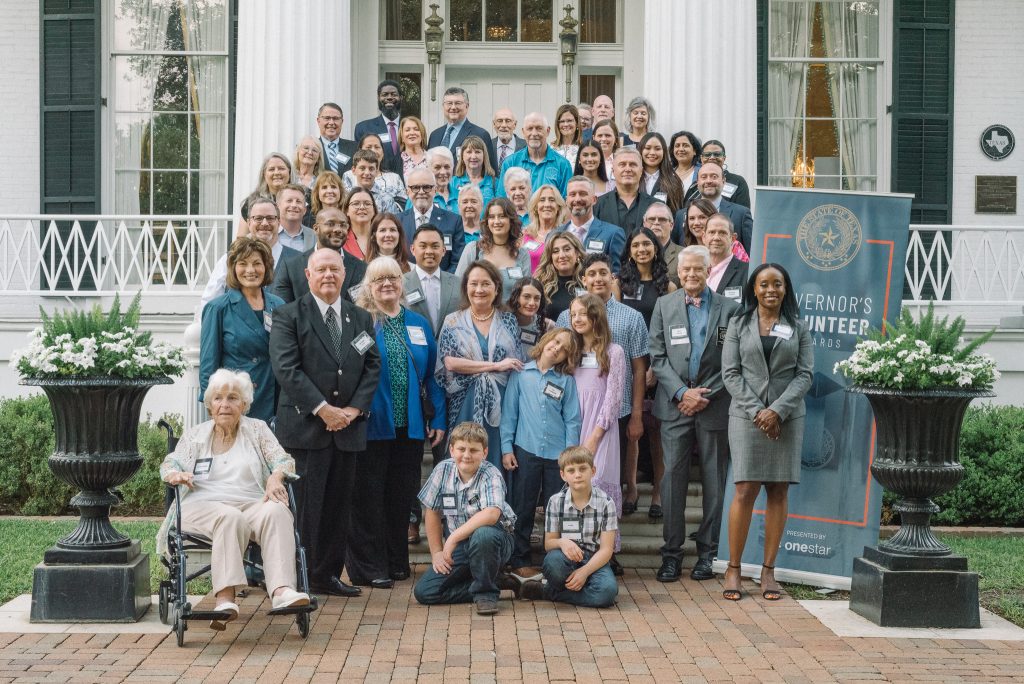
AUSTIN — First Lady Cecilia Abbott, Honorary Chair of the Governor’s Volunteer Awards, today announced the recipients of the 42nd Annual Governor’s Volunteer Awards, honoring individuals, groups, and organizations whose volunteer service is strengthening communities and inspiring others across Texas. Presented in collaboration with OneStar Foundation, the awards recognize exceptional leadership, dedication, and impact through service over the past year.

“I am honored to recognize this year’s Governor’s Volunteer Awards recipients as Texans whose commitment to service is making a lasting difference,” said First Lady Cecilia Abbott. “Their dedication reminds us that service has the power to unite communities, uplift neighbors, and inspire others to step forward. It is a privilege to celebrate these individuals, families, and organizations whose commitment to service reflects the very best of the Texas spirit.”

“These awardees demonstrate the extraordinary impact that service can have not only on communities, but on the people who serve alongside one another,” said Chris Bugbee, President and CEO of OneStar Foundation. “By sharing their stories, we hope to encourage more Texans to get involved, build connections across differences, and take action to strengthen their communities through service.”

Across Texas, volunteers play a vital role in bringing people together, addressing critical community needs, and empowering individuals to take action on issues they care about. The Governor’s Volunteer Awards elevate these stories of service, highlighting how volunteering bridges divides, creates meaningful change, and strengthens the fabric of communities statewide.

Administered by the OneStar Foundation, the Governor’s Volunteer Awards serve as the state’s highest recognition for volunteer service, shining a spotlight on the many ways Texans give back through their time, talents, and leadership.

Award recipients will be recognized during National Volunteer Month in April at a special reception hosted at the Texas Governor’s Mansion.

The recipients of the 42nd Annual Governor’s Volunteer Awards are:

Larry Dolan (Dallas): Governor’s Lifetime Achievement Award
For nearly three decades, Larry Dolan has been a steady voice for children in Dallas’ child welfare system. As Dallas CASA’s longest-serving volunteer since 1997, he has advocated for more than one hundred children, ensuring their needs and wishes are heard in court and helping secure safe, permanent homes. Larry also mentors new volunteers, generously sharing his experience and compassion. One of his most powerful impacts came full circle when a former child he supported returned as a CASA volunteer—still remembering Larry by name. His dedication continues to shape young lives and inspire others to serve.

Dave Freriks (Lubbock): Governor’s Lifetime Achievement Award
Since retiring in 1995 after over 30 years with the U.S. Secret Service, Dave Freriks has served nearly three decades as the volunteer Disaster Services Coordinator for The Salvation Army in the Texas South Plains. He has built and trained a network of responders who have supported almost 700,000 people affected by fires, floods, tornadoes, and emergencies in Texas and throughout the South. Dave has also contributed 30 years of service as a Salvation Army board member and is a key leader in Lubbock’s Lions Club and Red Kettle Campaign, helping raise more than $5 million. His steady leadership, compassion, and presence have made him a trusted force for good in West Texas.

Darrell Rodenbaugh (Plano): Governor’s Lifetime Achievement Award
Darrell Rodenbaugh started volunteering with North Texas Performing Arts 19 years ago and has devoted over a decade of full-time service to the organization, leading its transformation into the nation’s largest youth theatre organization. Under his volunteer leadership, NTPA has grown twelvefold, expanded to five locations, and now serves more than 11,000 students annually. Darrell has developed innovative programs in youth protection, character leadership, artist employment and led teams raising millions in philanthropic support. His hands-on commitment ranges from designing curricula to constructing light rigging and seating systems in new theaters. Darrell’s work has created lasting opportunities for young performers and strengthened arts communities across North Texas

Timothy Stroud (Houston): Governor’s Lifetime Achievement Award
Motivated by the loss of his father, a police officer killed in the line of duty, Timothy Stroud founded the Killeen Police Department Law Enforcement Assistance Fund in 2006. The entirely volunteer-run fund has provided over $1.4 million in direct support to officers, civilian staff, and families facing crisis. Tim also leads impactful programs for veterans through Stay Tuned for Vets, offering arts-based mental health support, equine therapy, and large-scale community resource events. His leadership with Operation Turkey Houston helps deliver more than 11,000 Thanksgiving meals annually. Tim’s compassion and service continue to strengthen and uplift vulnerable families across Texas.

Asvini Thivakaran (Round Rock): First Lady’s Rising Star Award
A nationally recognized youth environmental leader, Asvini Thivakaran began advocating for battery recycling in second grade, collecting more than 65,000 batteries and inspiring the City of Round Rock to adopt a permanent program that has now diverted over 100,000 batteries from landfills. She later founded Electrify Your Thoughts to expand STEM opportunities for underserved students, partnering with Title I schools to reach more than 1,000 young people and mentor over 100 science fair participants. Her students have advanced to regional competitions with high honors. Asvini’s work blends environmental stewardship, education, and youth empowerment, shaping the next generation of scientists and leaders.

John R. Dunn, Jr. (Kerrville): Volunteer of the Year Award
After the July 4 flood devastated Hunt and western Kerr County, John Dunn became a central leader driving the region’s recovery. As President of Hunt Preservation Society and Board Chair of Kerr Together Long-Term Recovery Group, John organized relief operations and, working alongside the Community Foundation of the Texas Hill Country and other partners, secured over $10 million in private and foundation funding to support home repairs, emergency aid, and water system restoration. John convened local, state, and federal partners and mobilized builders, volunteers, and case managers to accelerate rebuilding of homes and businesses. John’s thousands of hours of service have restored hope and helped revitalize the community, and his leadership continues to shape a stronger, more resilient Hill Country community.

Oscar, Yolanda & Adrian Cisneros (El Paso): Volunteer Family of the Year Award
After losing their young son Alex to cancer, the Cisneros family transformed their grief into service. Inspired by the joy Alex found in Creative Kids’ hospital art program, Yolanda, Oscar, and Adrian started volunteer weekly with Project RAP, supporting children affected by trauma in El Paso. For the last 18 years, through patient guidance and creative expression, they help young people process fear, rebuild confidence, and experience moments of healing. Their presence offers comfort drawn from lived experience, and every child they support carries forward Alex’s spirit. The family’s compassion has become a powerful source of hope.

TeamCITGO (Houston): Corporate Champion Award
For more than 30 years, CITGO has embedded volunteerism into its company culture through TeamCITGO, mobilizing employees, retirees, and contractors to strengthen communities across Houston and the Coastal Bend. In 2025 alone, volunteers contributed 9,074 hours with 135 causes and financially contributed to 846 causes. CITGO leads major initiatives in hunger relief, education, environmental stewardship, and community wellness. Programs include its long-running Caring for the Coast program, which has generated over 200,000 volunteer hours, 40% of which occurred in Texas and the Gulf Coast. Additional contributions in Texas supported more than 2.3 million pounds of food redistribution in Houston and 140,000 meals in South Texas. CITGO’s sustained, collaborative service reflects its deep Texas roots and commitment to community partnership.

Kendra Scott (Austin): Corporate Champion Award
Kendra Scott has built a company where philanthropy and giving back are core pillars of the brand. Through a dedicated philanthropy department and the Kendra Scott Foundation, the company empowers women and youth in health and wellness, education, and entrepreneurship. Signature programs such as Kendra Cares have brought the magic of the Color Bar to pediatric hospitals for over 10 years, while the Yellow Library program has supported 24 Title I elementary schools across Texas, expanding access to books and literacy resources. In 2025 alone, more than 12,000 Kendra Gives Back events were held in partnership with local nonprofits nationwide, and employees contributed over 9,000 volunteer hours in their communities. Following the devastation in Central Texas, Kendra Scott raised more than $500,000 and collected essential supplies across the state to support immediate relief and long-term rebuilding efforts. The company continues to champion meaningful, sustained impact in the communities it serves.

KENS 5, San Antonio’s Own (San Antonio): Corporate Champion Award
For a decade, KENS 5 has been an anchor of mentorship and community service in San Antonio. Through its partnership with Communities In Schools of San Antonio, station staff mentor high school students through the InspireU Workplace Mentors program, helping them build confidence, communication skills, and a clear vision for their futures. KENS 5 also plays a pivotal role in the annual Stuff The Bus School Supply Drive, using its platform to inspire generosity across the city. In 2024, the station delivered more than 5.9 million impressions through coverage that helped equip students in 140 schools with the supplies they need to succeed.

NiHao Food Bank Initiative (Plano): Community Champion Award
Founded in 2021 as a cultural affinity group of the North Texas Food Bank, the NiHao Food Bank Initiative has delivered nearly 3 million meals to neighbors facing hunger. The volunteer-driven group unites families, youth, and community partners to strengthen food security through monthly packing events, cultural fundraisers, restaurant collaborations, and civic advocacy. In 2025, NiHao volunteers supported the passage of HB 26 (“Food Is Medicine”) and raised the equivalent of 120,000 meals through its 2026 Community Meal Reward Card. Creative events such as its annual charity concert further elevate awareness and engage diverse supporters across Dallas–Fort Worth.

Ark of Highland Lakes (Marble Falls): Community Champion Award
Ark of Highland Lakes is a faith-driven organization uniting churches, agencies, and volunteers to serve families in crisis across the Highland Lakes region. Born after the 2018 floods, Ark provides disaster relief, food, hygiene, dental care, donated goods, and long-term transformation. In 2025, Ark launched Valley View Village, a self-sustaining community that combines housing with income-generating opportunities and Christ-centered support to help families break generational cycles of poverty. Ark has also led the long-term recovery for Burnet and Llano County after the July 4th, 2025 flood, recruiting and training 840 volunteers. Ark works to unite hands in serving, heal hearts who are hurting and vulnerable, and transform communities through love and resilience.

Lifelong Learning with Friends (Austin): Education Champion Award
Lifelong Learning with Friends expands the University of Texas experience to adults with intellectual and developmental disabilities by offering inclusive classes where each participant learns alongside a UT student volunteer. Since 2010, more than 700 adult learners and 1,600 university students have taken part in courses spanning science, arts, culture, and life skills. The program fosters confidence, friendships, and intellectual growth for adults with disabilities while cultivating civic responsibility among college students. Through thoughtful curriculum design and meaningful relationships, Lifelong Learning with Friends creates a campus community where people of all abilities learn and grow together.

BOUNCE Student Disaster Recovery (Statewide): Rebuild Texas Disaster Impact Award
BOUNCE mobilizes middle school, high school, and college students to support disaster recovery across Texas and beyond. Working with local partners, for the last 12 years, the organization has deployed youth volunteers to repair homes, rebuild community spaces, and support families recovering from storms and flooding. Teams come fully equipped with their own tools, transportation, and supplies, easing the burden on recovery organizations. Students perform significant tasks including roofing, demolition, flooring, painting, and home repair. After Hurricane Beryl, BOUNCE sent 82 volunteers to Jefferson County to assist families impacted by Hurricane Beryl and helped remodel a donated warehouse for recovery use. Since 2022, more than 880 students have served with remarkable dedication and teamwork.

Nicole Gabler (Houston): AmeriCorps Legacy of Service Award
Nicole Gabler turned her AmeriCorps service with SWIFT in Schulenburg and Weimar in 2013 to 2015 into a lifelong commitment to community. After earning her master’s degree in Nonprofit Management with her education award, she went on to support families at Texas Children’s Hospital and now serves children with critical illnesses through Make-A-Wish Texas Gulf Coast and Louisiana. Nicole is also a deeply engaged volunteer. As President of the Junior League of Galveston County, she launched a Juneteenth book initiative that has reached thousands of children. She also helped create Adaptive Access Tours at the Houston Livestock Show and Rodeo and serves as a dedicated Girl Scout leader.

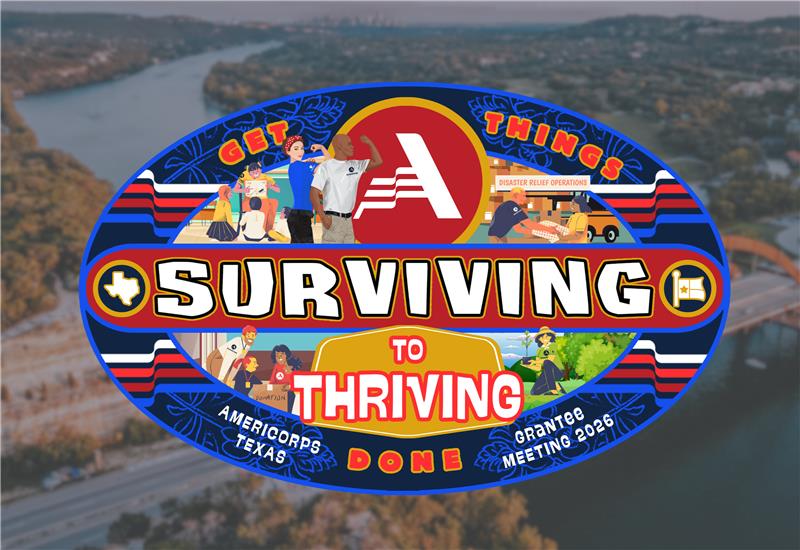
Surviving to Thriving | 2026 AmeriCorps Texas Grantee Meeting

On March 3–4, leaders from more than 30 AmeriCorps program across Texas gathered in Austin for the 2026 AmeriCorps Texas Grantee Meeting, hosted by OneStar. This year’s theme, “Surviving to Thriving,” drew inspiration from the reality show Survivor—a playful but fitting metaphor for a year that has required resilience, adaptability, and collaboration from programs across the state. While the challenges facing the national service sector are real, the gathering reminded participants that they are part of a larger “tribe” of leaders committed to strengthening communities across Texas. 

The Survivor theme carried throughout the event, from team challenges like tower-building, puzzle solving, memory games, and egg races to creative details like paper torches, campfire tablescapes, and thank-you notes designed as immunity idols. But the deeper goal was not simply to survive the moment—it was to equip leaders with tools to lead through uncertainty and build stronger programs in the years ahead. The opening session on managing change set the tone by grounding the event in an honest conversation about how people experience transition and how leaders can guide teams through uncertainty with empathy, clarity, and resilience.

Throughout the two days, the OneStar team and special guest speakers shared practical strategies for strengthening AmeriCorps programs—from supporting member wellbeing while maintaining compliance to designing intentional workforce pathways that help members translate service into careers. Sessions also explored how strong partnerships expand program impact, how asset-based leadership can reduce burnout and increase community ownership, and how compelling storytelling can help the public understand the transformative power of national service. Together, the sessions reinforced a shared message: thriving programs are built not only on compliance and structure, but on relationships, purpose, and the strengths already present in communities.

OneStar extends sincere thanks to the guest presenters who shared their expertise and insights with the AmeriCorps Texas community: Natalie Gray (South Rim Partners), Gabriela García-De Avila (Literacy First), Ashley Harris-Land (Legacy Community Health), Laura Seals (WT Community Resilience Corps), Angela McCauley (Texas Southmost College), LaToya Sales (Breakthrough Central Texas), and Emily Dressen (Texas Health & Human Services). Their perspectives helped equip attendees with new ideas, tools, and inspiration to carry forward into their programs. 

“All of the facilitators provided such great insight and real world knowledge and applicable tools to actually implement the topic being presented at my work place,” said one attendee. “So many tangible tools and resources to use throughout the year with managers and whole site.”

Two days of reflection, learning, and friendly competition reminded everyone that AmeriCorps programs may sometimes feel like they are navigating their own island challenges—but together they form a resilient network of leaders working to strengthen Texas communities. With new strategies, renewed connections, and a few Survivor-style victories under their belts, participants left Austin ready to move from surviving to thriving.

So much wonderful content and learning. Honestly. It was all applicable to our current needs and future vision. I really loved the managing change session because I had a lot of 'ah-ha' moments. I really want to make the process more human for my site staff.

Key Takeaways

  • Change leadership requires empathy as much as strategy. Leaders must understand how people emotionally experience change and provide language, structure, and support that help teams move through uncertainty with confidence.
  • Compliance and compassion can coexist. Supporting AmeriCorps members effectively means balancing accountability with care—providing clear documentation practices while also prioritizing member wellbeing and mental health.
  • Thriving programs build intentional pathways for members. Workforce development should be embedded into the service experience through coaching, certifications, apprenticeships, and other opportunities that help members translate service into meaningful careers.
  • Asset-based leadership reduces burnout. Shifting from a deficit mindset (“what’s missing?”) to an asset mindset (“what strengths already exist?”) empowers members and communities to lead solutions and creates more sustainable initiatives.
  • Strong partnerships multiply impact. Cross-sector collaboration—with schools, healthcare systems, universities, and community organizations—helps programs extend their reach and address complex challenges more effectively.
  • Stories make impact visible. Research shows that stories are remembered far more than facts alone, making them one of the most powerful tools for demonstrating AmeriCorps’ value to policymakers, donors, and the public.
  • Focus on transformation, not just activity. The most compelling stories—and the strongest programs—center on how people and communities change through service.
  • Programs thrive when members are seen as leaders. Inviting members to contribute their skills, passions, and ideas strengthens engagement and builds ownership in the mission.
2026 AmeriCorps Texas Grantee Meeting: Surviving to Thriving

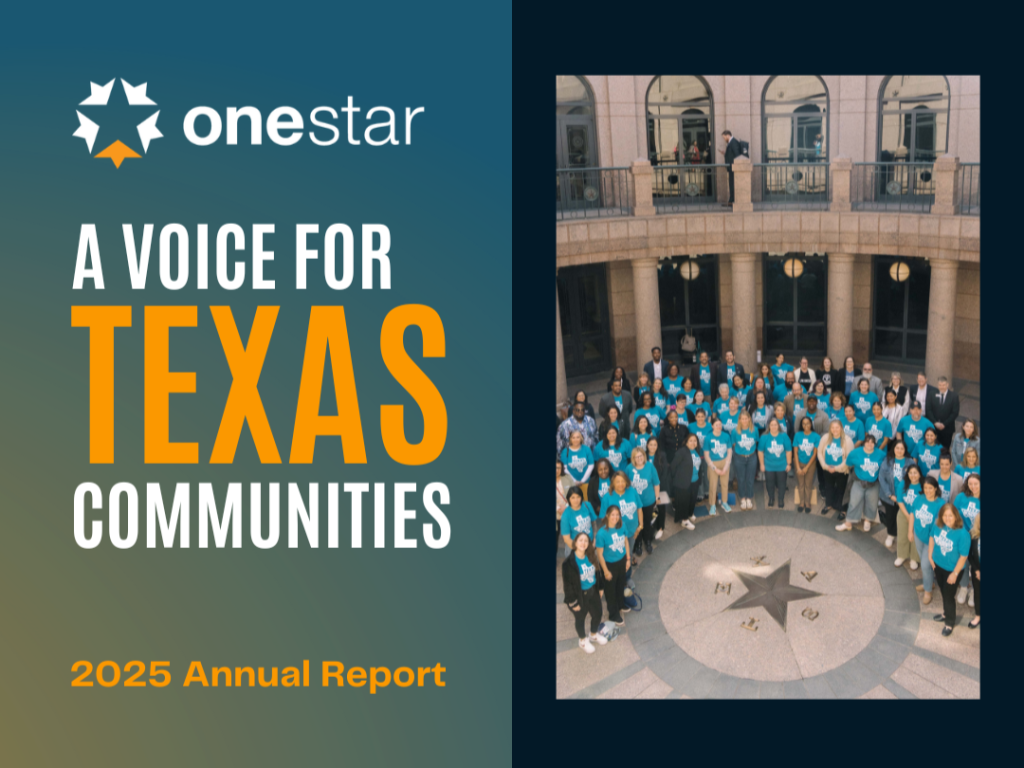
A Voice for Texas Communities: OneStar 2025 Annual Report

We are pleased to announce the release of the OneStar 2022 Annual Report! This year’s publication features the theme of Moving Forward, Giving Back, which highlights the enormous progress we have made together in fostering more generous and resilient Texas communities.

In addition to showcasing OneStar’s impact and providing transparency into our operations, we prioritized telling the stories of our partners across Texas to illustrate the power of collaboration. Our 2021 Annual Report spotlights specific examples of how OneStar builds capacity for nonprofits doing amazing work in Texas and provides critical support to diverse organizations statewide.

We extend our appreciation to our extraordinary colleagues from Sewa International, Center Against Sexual and Family Violence, Volunteer Houston, Hookset Brother Combat Recovery, Texas Department for State Health Services, United Ways of Texas, and Latinitas, who agreed to have their experiences featured in these pages. This is just a small glimpse of the many valued partners we had the privilege of working with in 2021, and we thank all of you for joining our us in our mission to build stronger Texas communities.

Letter from the CEO: OneStar 2022 Annual Report

2022 was truly our year of coming back together! While we continued to embrace the flexibility of meeting virtually, it was refreshing to finally reunite for face-to-face gatherings. From an award ceremony at the Texas Governor’s Mansion to conferences and a staff retreat, it was heartwarming to see and embrace our friends, partners, and teammates in person.

This was also a year of getting things done with our partners. A few highlights for me: we distributed a record amount of AmeriCorps funding to support an incredible portfolio of national service programs across Texas. We launched Texas Nonprofit Strong in partnership with United Ways of Texas to equip our sector and promote the impact nonprofits have in our communities. And we intensified our efforts to provide accessible programming and resources to rural communities by launching the Texas Rural Nonprofit Network and establishing new rural partnerships.

It was also a year of new beginnings as we moved into a new office in East Austin and opened our first satellite location in Dallas. We are proud to now be a part of the Water Cooler at Pegasus Park, joining a campus of social impact organizations seeking to be more effective through collaboration.

In 2022, we learned yet again that from tragedy comes unity. In the aftermath of the tragic school shooting in Uvalde, OneStar was honored to collaborate with local leaders to launch the Robb School Memorial Fund. Donors from around the world overwhelmed us with their outpouring of support. I was moved and deeply grateful to each of our community partners that stepped forward to help bring support to Uvalde.

One consistent theme the past year has demonstrated is what becomes possible when we work together. As I enter my fourth year leading OneStar, I am grateful for the hard work of this dedicated team to create a stable foundation for our work, even when the world is changing so much around us. I am excited to see how we continue to calibrate and build in the upcoming year. Thank you for being with us every step of the way.

Sincerely,

Chris Bugbee
President & CEO

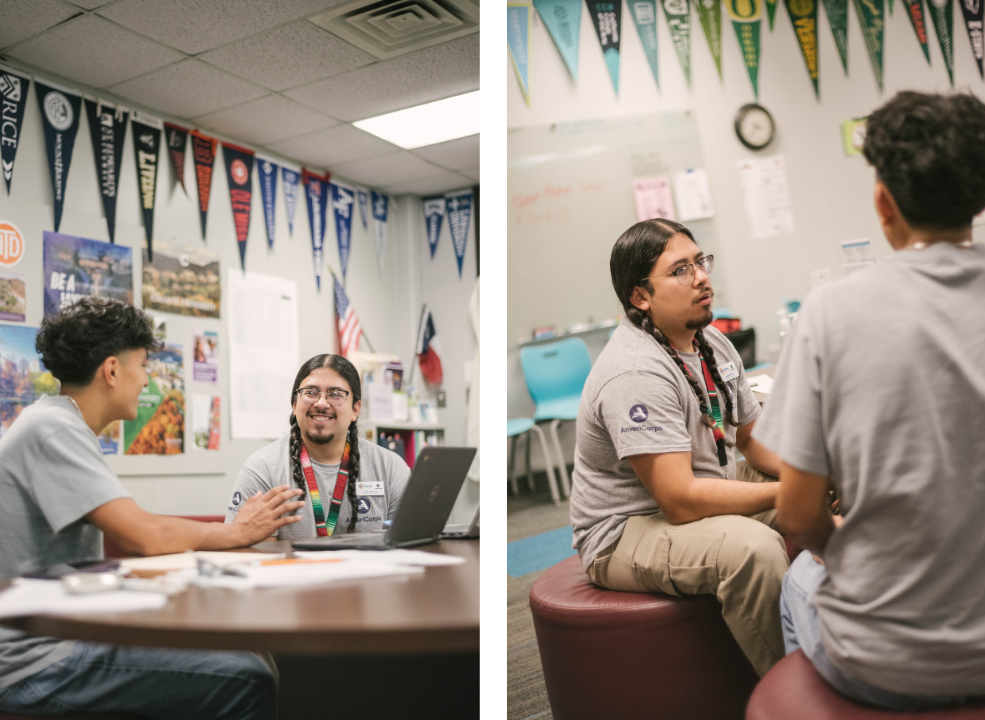
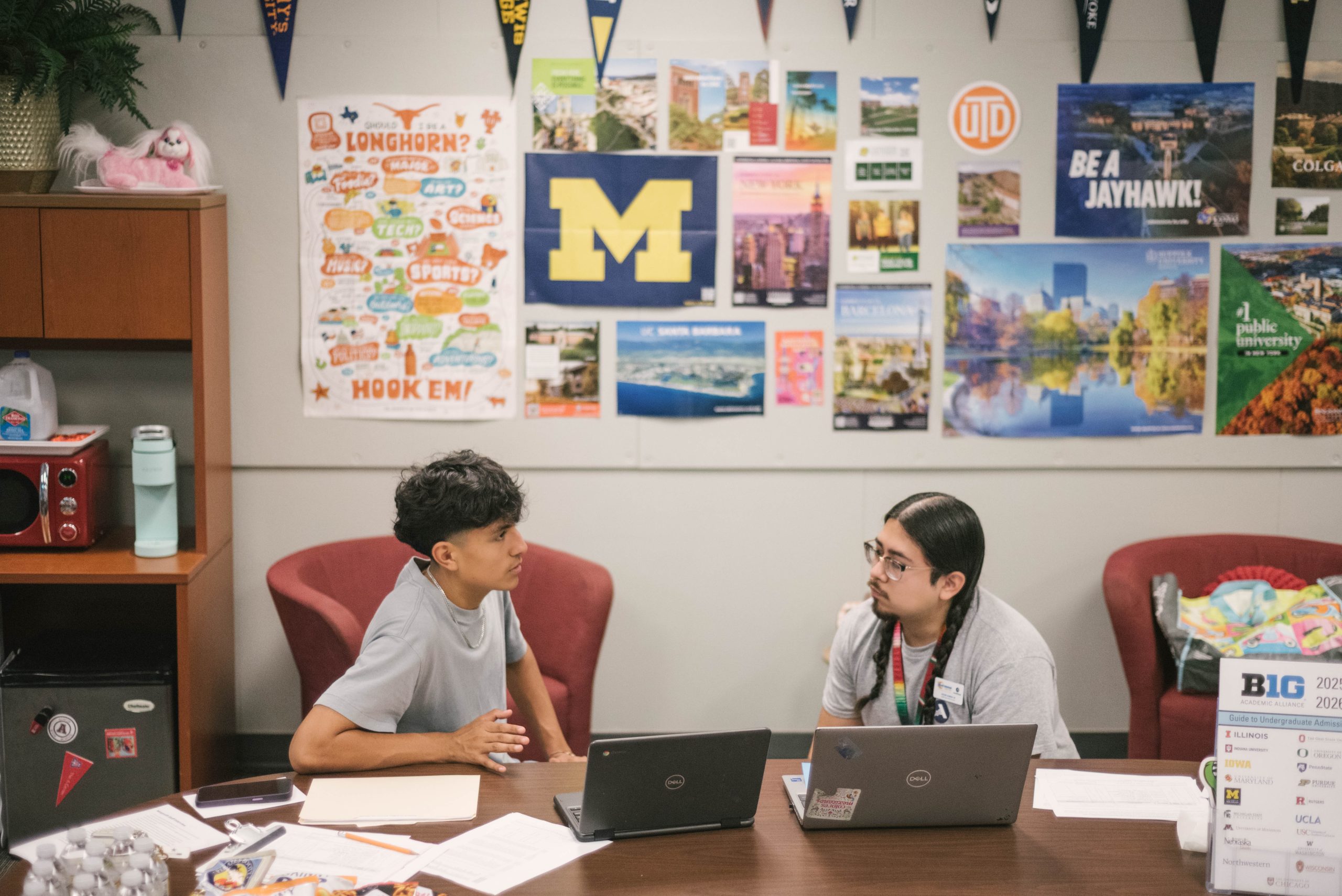
Taking Time & Building Trust: How AmeriCorps Turns Presence into Student Progress

In education, time is often framed as urgency in the form of test dates, deadlines, and application cycles. But at Breakthrough Central Texas, time is treated differently. It is not the problem to solve—it is the solution itself.

Garrett Boyd, a Breakthrough Program Coordinator, supervises AmeriCorps members at Austin High School and sees this every day. His work sits at the intersection of systems and people—outcomes and relationships—and he is clear about what actually makes progress possible.

“AmeriCorps really helps fill that gap in allowing us to form deep, meaningful relationships with the students and take them to wherever they wish to go,” he says. “We’re able to scale the personal, intimate relationships with our students through AmeriCorps.”

That concept—personal, intimate relationships at scale—is not a paradox. It is a description of capacity. AmeriCorps does not replace the work of educators; it makes it possible for that work to be sustained, repeated, and human.

“The most important aspect of success is to build that relationship of trust. Getting to know the student as they are is extremely important,” Garrett says. “At the end of the day, we all want to be seen for more than just a data point. We want to be seen as an individual.”

Trust Makes Change Possible

Breakthrough Central Texas is the region’s leading college access and success nonprofit, partnering with students—many of them first in their families to pursue higher education—from middle school through college. For more than 20 years, Breakthrough has supported students across more than 60 public schools and nearly 100 colleges and universities through individualized advising and long-term academic support. The impact is clear: 97% of Breakthrough students graduate from high school on time, 88% enroll directly in a bachelor’s, associate, or certificate program, and 55% ultimately earn a degree or certificate—compared to 17% of their peers from low-income communities.

In the Breakthrough model, trust is a vital ingredient for success. It is the foundation that allows students to take academic risks, to ask questions they don’t yet know how to phrase, and to imagine futures they may not have seen modeled before.

“Life is messy, life is complex, and in this work, we have to lean into that. We have to really meet them where they are: the good, the bad, the ugly,” says Garrett. “It’s just honoring that, giving them space for that, listening, and also giving them advice so that they’re not only stuck in that state, but they’re able to build that resiliency and move forward.”

AmeriCorps gives Breakthrough the time to do exactly that—to stay with students long enough for trust to form and confidence to grow.

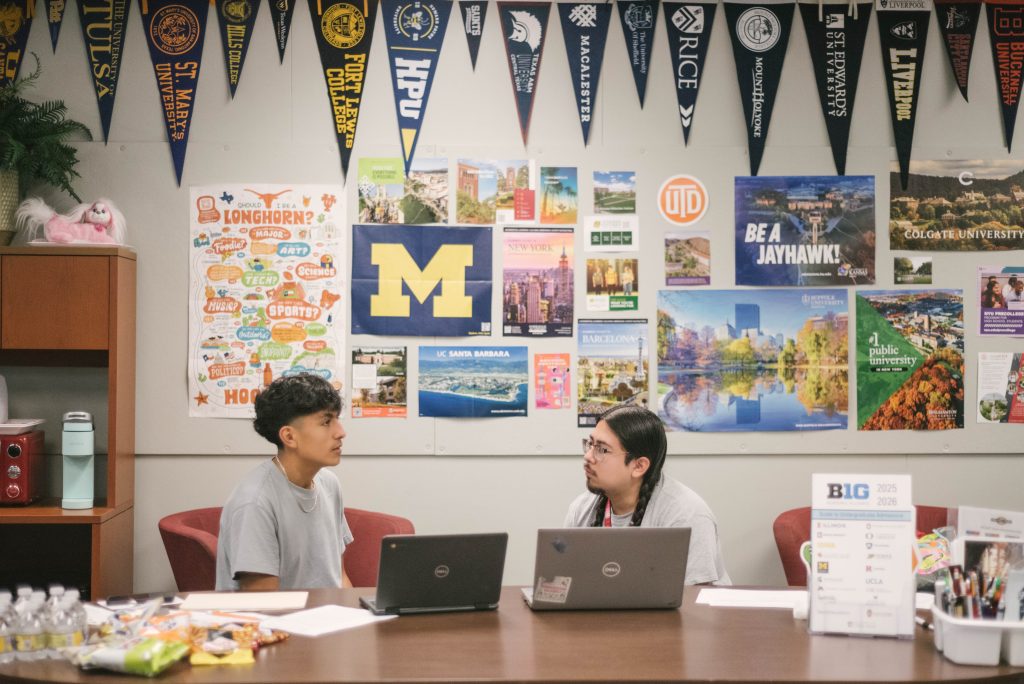
Inside that time are people. One of them is Jacobo Garza, an AmeriCorps Program & Advising Fellow who shows up week after week with patience, creativity, and consistency. Another is Alex G., an 11th-grade student at Austin High School who is in the first generation of his family to pursue college, balancing big ambitions with the realities of figuring things out as he goes.

Their relationship is simple, and it is everything: structure makes presence possible, presence makes trust possible, and trust makes change possible.

“Life is messy, life is complex, and in this work, we have to lean into that. We have to really meet them where they are: the good, the bad, the ugly. I've been in advising sessions where students are crying, laughing, frustrated, angry— all the emotions. We see that every day. It's just honoring that, giving them space for that, listening, and also giving them advice so that they're not only stuck in that state, but they're able to build that resiliency and move forward.”

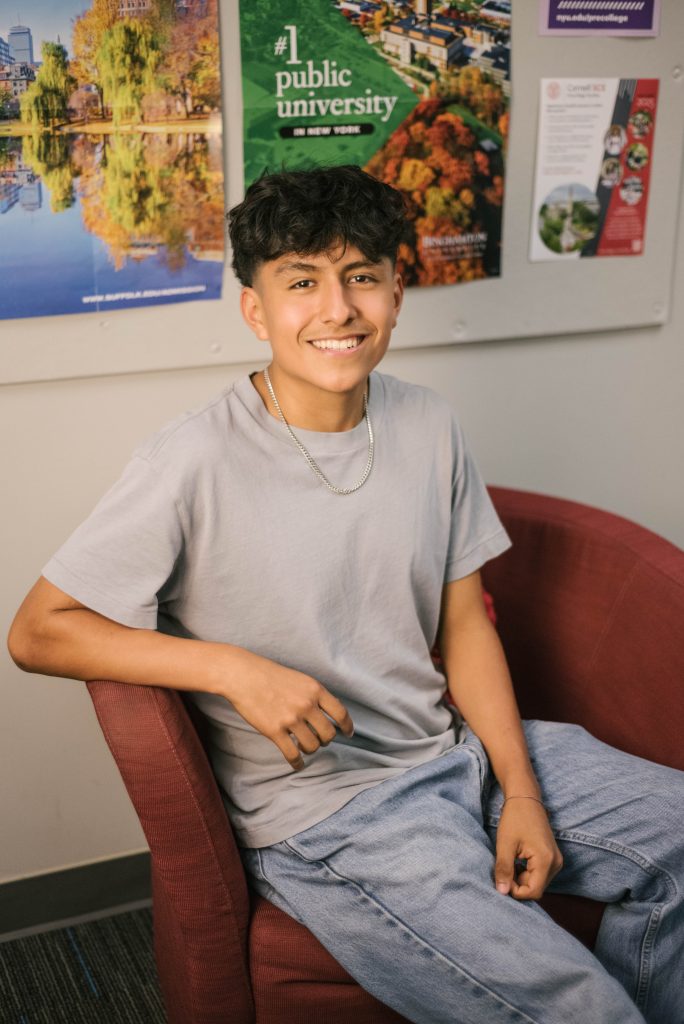
Alex G.
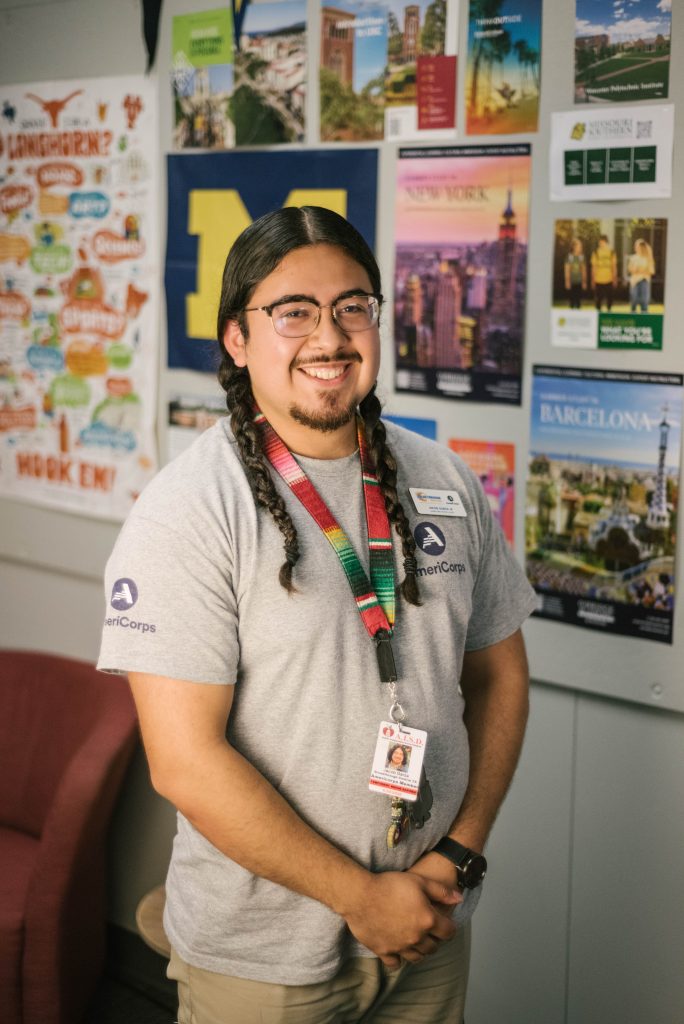
Jacobo Garza
Garrett Boyd

More than College, College, College

When junior Alex first joined Breakthrough, he thought he understood what the program was for.

“I always thought that Breakthrough was just college, college, college. But as I slowly got more into Breakthrough, I learned that there’s definitely more steps before college is the main focus… They make sure that you’re in a good place for your life—emotionally, physically.”

Those steps are where AmeriCorps members spend most of their time. Alex’s future aspirations and interests span professional soccer, criminal justice, engineering, and business—potential paths that require not only preparation, but guidance. As a first-generation student, there is no inherited roadmap for how to sequence those decisions or weigh tradeoffs. “Breakthrough has helped me navigate those goals step by step,” Alex says.

Alex’s journey has been shaped by ambition, uncertainty, and responsibility—not just to himself, but to the family that raised him. Much of his drive comes from home: from his older sister, who paved the way as the first in the family to go to college and now works in city government, to his mother, who is employed as a housekeeper. When Alex reflects on his family, he doesn’t talk about pressure: he talks about pride.

“My mom has been probably my main motivation for doing a lot of things. She’s not really the type of person to get on me about my grades or things like that, but… just knowing that she’s proud of me for the work and all I’ve accomplished, it makes me really happy… I feel like I do it for her.”

But motivation alone does not organize deadlines, clarify requirements, or relieve the quiet pressure of not wanting to get it wrong. That is where Breakthrough—and AmeriCorps members like Jacobo—enter Alex’s life in a practical, sustained way.

“There’s definitely a lot of preparation and organization, which especially in this point in my life is something that is key to moving on to college,” says Alex. “If I didn’t have someone like Jacobo helping me with those little details, I would likely not be in a good place. I’d be very lost, very unorganized, stressed. But having him, I feel prepared for everything.”

This is what long-term advising looks like when it works: not narrowing possibility, but teaching students how to carry it. Over time, that preparation becomes something deeper than logistics. 

“Breakthrough has definitely helped me set my standards high and keep them high… Breakthrough taught me that school should be a place to learn, a place to have fun, but overall, a place where you start to find out who you really are,” Alex says.

"Breakthrough has definitely helped me set my standards high and keep them high. If it wasn't for Breakthrough, I definitely wouldn't be the hardworking person I am today...Breakthrough taught me that school should be a place to learn, a place to have fun, but overall, a place where you start to find out who you really are."

A Creative Lens on Student Success

"What [Breakthrough] brought me was the sense of community, like a tight-knit village. The resiliency, the way that they empower one another, how that all wraps up into this beautiful gift that they offer to so many of our students and families: they take that and are able to open up new doors. I reflect on my own journey, and being able to take that and give it back to our students and families, they can see and navigate where they want to go."

Jacobo Garza did not arrive at AmeriCorps by accident. His motivation is rooted in family too—both honoring what came before him and paying it forward to the community that shaped him. As a first-generation college graduate himself, Jacobo understands the invisible labor students carry when they are navigating systems their families have never had to navigate before.

“My mom always advocated for us to take any kind of opportunity that arises. No matter what was ahead of us, just take that first step and keep marching forward… In the back of my mind— in school, in college, and in work— I would always think about my mom, my dad, my siblings. How can I honor them and also pay it forward, back to my own community?”

AmeriCorps brings together people with varied skills and lived experiences, and Jacobo’s degree and background in the arts illustrates how that diversity can be a valuable asset. Jacobo does not want art to live only on gallery walls or in studios; he wants it embedded in community—in conversation, in education, in places where people are still figuring out who they might become.

AmeriCorps gave that instinct structure. In Breakthrough afterschool programs and advising sessions, Jacobo designs resources that feel approachable rather than intimidating. He helps students visualize choices, articulate interests, and see themselves as capable of growth. Creativity becomes a bridge: a way to lower anxiety, to invite reflection, to help students talk about things that don’t always come easily in traditional academic settings.

“I like to think the foundation in art was very communal. Being able to apply some of my skills in art, whether it’s a workshop or an advising material packet or plan… making it feel more interactive, more visually appealing, reinvigorating that playfulness… especially in high school when everything’s so intense.”

That creativity allows Jacobo to reach students in ways traditional academic advising often cannot—by centering humanity first and instruction second.

Jacobo sees AmeriCorps as preparation not only for service, but for leadership. His long-term goal is to work in art administration and education, to build spaces where creativity and opportunity intersect, especially for young people who don’t always see themselves represented in cultural institutions.

Strength in Flexibility

"We are strong experts in college and career pathways, but what is all of our knowledge and our advice if it's not being received by the students?... Students are very perceptive. They know when people are doing something for work and it’s being forced, versus when they truly find joy in what they do, and they truly care."

From Garrett’s perspective, AmeriCorps is most powerful not because it standardizes support, but because it diversifies it. Members arrive with different instincts, talents, and professional orientations—and those differences strengthen the work.

“If you have a talent, if you have a skill, a strength, it is almost a duty to share that with the world at large… Giving back and giving something of yourself to someone else is vital. It’s how we keep everything running.”

Jacobo’s artistic lens complements Garrett’s curriculum- and data-driven approach. Alex’s athletic discipline meets both where he is. Together, they form a system that is flexible rather than rigid, responsive rather than prescriptive.

“We are strong experts in college and career pathways, but what is all of our knowledge and our advice if it’s not being received by the students?” Garrett says. “Students are very perceptive. They know when people are doing something for work and it’s being forced, versus they truly find joy in what they do, and they truly care.”

That care is not abstract. It is visible in how students respond—how willing they are to open up, to take academic risks, to imagine futures they may not have considered possible before.

The Math that Matters

Breakthrough Central Texas can point to the numbers: graduation rates, enrollment rates, completion rates that far exceed regional averages. But those outcomes are downstream. What comes first is belonging.

“When Jacobo and I work together,” Garrett says, “we’re not working in isolation.”

The presence of AmeriCorps changes the atmosphere of a school. It creates a sense of shared responsibility, of adults who know students well enough to notice changes, to intervene early, to celebrate growth.

For Alex, that presence is personal. “He makes me feel listened to and supported,” he says. “That means a lot to me.”

For Jacobo, it is formative. “AmeriCorps means community resilience and empowerment,” he says. “It has shaped me into a stronger leader in the spaces and the community I serve by advocating, by finding my voice, and also being creative with the resources that we have.”

Systems do not change people. People do—but only when they are given the time, structure, and support to stay. AmeriCorps provides that time. Breakthrough puts it to work. And year after year, student by student, those results quietly compound.

Interviews, photography, editing & prompting by Joshua Winata

Written with AI assistance

Reintroducing the Rebuild Texas Fund: A Trusted Way to Support Communities After Disaster

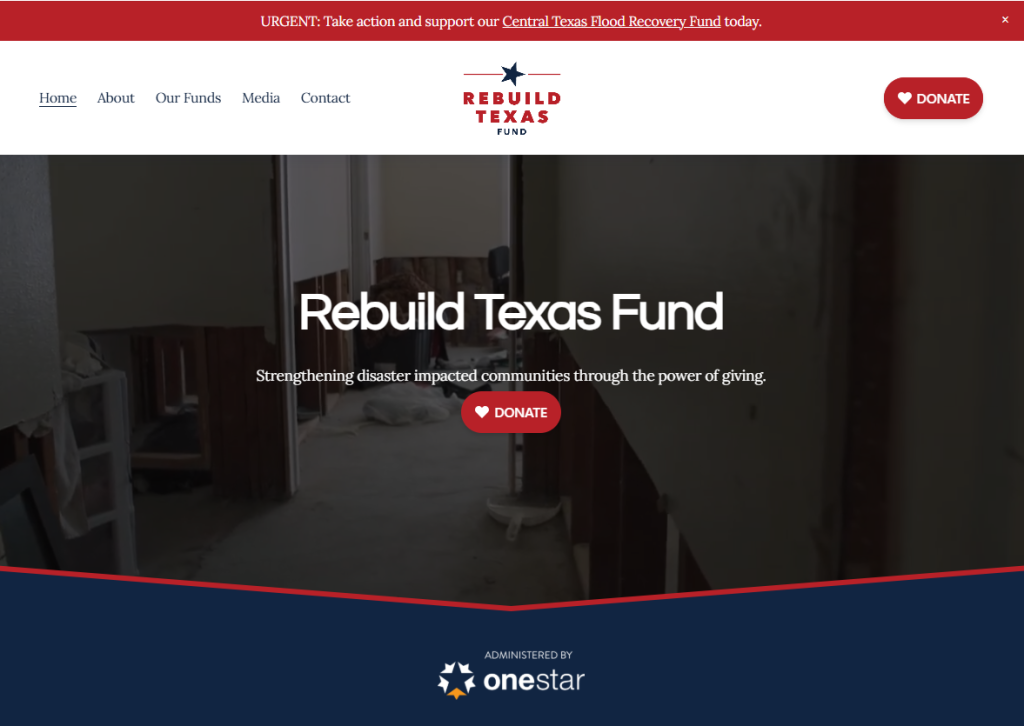
When disaster strikes in Texas, people across the state want to help—but finding a trusted, effective way to give can be overwhelming. That’s why we’re excited to announce the launch of the new and improved Rebuild Texas Fund website at RebuildTX.org —a streamlined platform that makes it easier than ever for donors to respond quickly and confidently when Texas communities are in need.

First established in 2017 in response to Hurricane Harvey, the Rebuild Texas Fund is a statewide disaster recovery fund that mobilizes resources in the immediate aftermath of disaster and supports long-term community recovery. With more than $109 million raised to date, the Fund has supported communities affected by Hurricane Harvey, COVID-19, the Uvalde school shooting, Central Texas flooding, and more.

Thanks to the generosity of donors and the strength of local partnerships, the Rebuild Texas Fund has become a trusted vehicle for ensuring that your charitable dollars are delivered quickly, transparently, and effectively—especially in times of crisis.


What’s New on the Website?

The new Rebuild Texas Fund website reflects our continued commitment to transparency, impact, and donor trust. Key features include:

  • Streamlined Donation Experience
    Quickly contribute to active disaster funds with just a few clicks—so you can make an immediate difference when time matters most.
  • Improved Transparency
    Learn about the specific disasters we’ve supported and explore how funds are used, where donations go, and what kinds of projects your support makes possible.
  • Impact Spotlights
    See real stories, data, and photos that highlight how Rebuild Texas Fund investments have helped Texans rebuild their lives.

Whether you’re a donor looking to make an impact or a community leader preparing for what comes next, the new Rebuild Texas Fund website is designed to support meaningful action and long-term resilience across Texas.

OneStar Announces $29.8 Million in AmeriCorps Funding to Power Service in Texas Communities

Texas nonprofits seek more than 2,900 AmeriCorps members to meet local needs

AUSTIN – From tutoring children in rural classrooms to helping families put food on the table, thousands of Texans will be rolling up their sleeves to strengthen their communities thanks to $29.8 million in AmeriCorps funding awarded to Texas.

Administered by OneStar Foundation, this investment will support 30 programs and engage 2,961 AmeriCorps members who will serve more than 3.16 million hours across the state. These members will help students succeed in the classroom, expand access to healthcare, respond to disasters, restore public lands, and build the capacity and reach of nearly 700 schools, clinics, shelters, and local nonprofit and faith-based organizations.

AmeriCorps members receive a living allowance, health care, and childcare during their service. At the end of their term, they earn a Segal AmeriCorps Education Award—worth a combined $13.7 million statewide this year—to pay for college, vocational training, or to repay student loans. Individuals interested in serving can visit my.americorps.gov to search and apply for AmeriCorps positions in Texas.

Earlier this year, the future of many AmeriCorps Texas programs appeared uncertain when $11.7 million in federal funding was unexpectedly terminated in Texas, halting service for 382 members and pausing expansion plans within the state. Thanks to action by policymakers and strong advocacy from local leaders, much of that funding has now been restored—preserving AmeriCorps as a lifeline for communities across Texas. 

“When disasters strike, when classrooms need mentors, when families need help—AmeriCorps members are there. They bring the heart and determination that Texans are known for, working hand-in-hand with local partners to solve problems and build community resilience,” said Chris Bugbee, OneStar President & CEO. “AmeriCorps transforms lives—not just for those receiving vital services, but for the members themselves, who gain new skills, career opportunities, and a lifelong commitment to service. This investment is more than dollars—it’s a catalyst for strengthening communities in every corner of our state.”

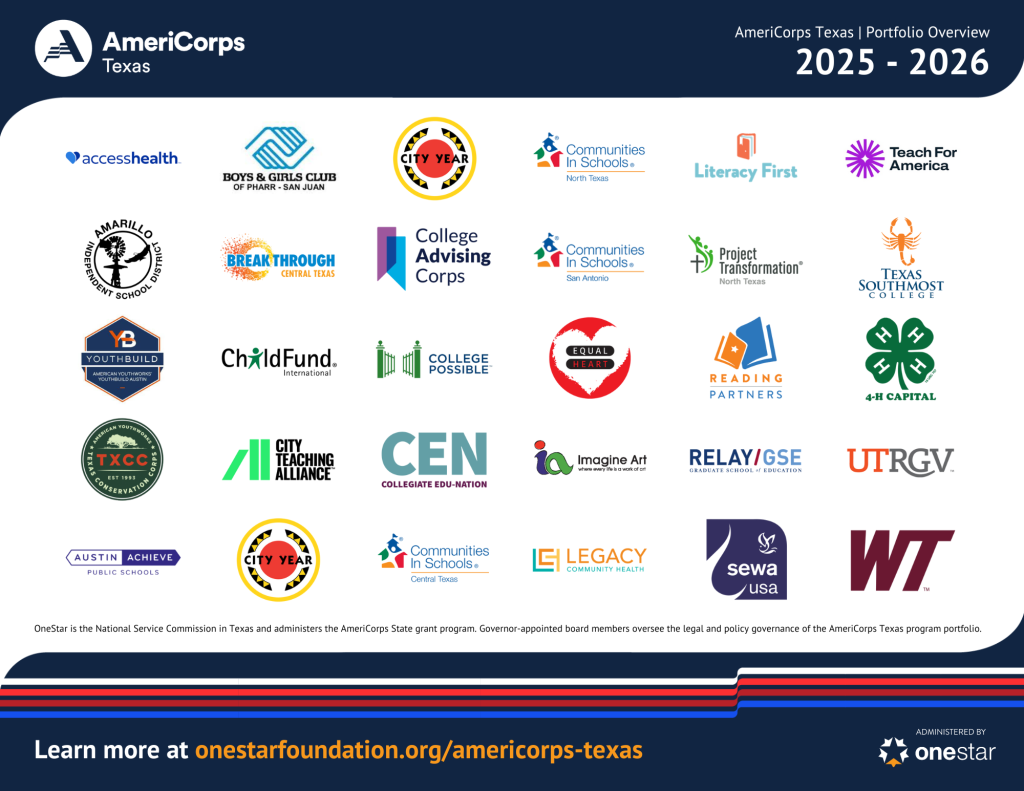
Funding has been awarded to the following Texas organizations:

  • AccessHealth
  • Amarillo Independent School District
  • American YouthWorks Health Corps
  • American YouthWorks Texas Conservation Corps
  • Austin Achieve Public Schools
  • Boys & Girls Club of Pharr-San Juan
  • Breakthrough Central Texas
  • ChildFund International
  • City Teaching Alliance
  • City Year Dallas
  • City Year San Antonio
  • College Advising Corps
  • College Possible
  • Collegiate Edu-Nation
  • Communities In Schools of Central Texas
  • Communities In Schools of North Texas
  • Communities In Schools of San Antonio
  • Equal Heart
  • Imagine Art
  • Legacy Community Health
  • Literacy First
  • Project Transformation North Texas
  • Reading Partners North Texas
  • Relay Graduate School of Education
  • Sewa International
  • Teach For America
  • Texas Southmost College
  • Travis County 4-H CAPITAL
  • The University of Texas—Rio Grande Valley
  • West Texas A&M University
AmeriCorps State and National, a federal-state partnership with a central role for governor-appointed state service commissions like OneStar, develops and implements state-specific national service programs. These grants allow organizations to recruit, train and supervise AmeriCorps members who provide services in the areas of education, disaster response & recovery, health, environmental stewardship, economic opportunity, and support for veterans & military families.
— 30 —

About AmeriCorps

AmeriCorps, the federal agency for volunteerism and national service, provides opportunities for Americans to serve their country domestically, address the nation’s most pressing challenges, improve lives and communities, and strengthen civic engagement. Each year, the agency places more than 250,000 AmeriCorps members and AmeriCorps Seniors volunteers in intensive service roles; and empowers millions more to serve as long-term, short-term, or one-time volunteers. Learn more at AmeriCorps.gov.

About OneStar

OneStar strengthens Texas communities by creating pathways for individuals and organizations to engage, connect and accelerate their impact. We advance service and volunteering as effective solutions to our state’s toughest social challenges. We are recognized as a statewide voice for the Texas nonprofit sector and a respected partner to foundations, state agencies and the business community. Born from state government in 2004, we carry out our mission with direction and guidance from the Office of the Texas Governor. Learn more at onestarfoundation.org.

Texas Opens Nominations For The 42nd Annual Governor’s Volunteer Awards

This press release was originally posted here by The Office of the Texas Governor.

AUSTIN — Nominations are now being accepted for the 42nd Annual Governor’s Volunteer Awards. Administered by the OneStar Foundation, the Governor’s Volunteer Awards are an opportunity for the State of Texas to honor exemplary individuals who have demonstrated exceptional dedication to improving their communities through outstanding service and volunteering.

“Every day, Texans from all walks of life give their time and talents to lift up their neighbors and strengthen the fabric of our communities,” said First Lady Cecilia Abbott. “Greg and I are continually moved by the powerful stories of service we see across the state. Texans are encouraged to celebrate outstanding individuals and organizations whose compassion and leadership are a testament to the Texas spirit by nominating them for an Annual Governor’s Volunteer Award.”

“As we launch the 42nd Governor’s Volunteer Awards, we are proud to recognize the everyday heroes who remind us that service is not only an action but a legacy,” said OneStar President and CEO Chris Bugbee. “Through this partnership with the Governor and First Lady, we celebrate the perseverance, generosity, and impact of Texans who are building stronger, more connected communities across our state.”

Nominations are open in nine categories:

  • Governor’s Lifetime Achievement Award
  • First Lady’s Rising Star Award
  • Volunteer of the Year Award
  • Volunteer Family of the Year Award
  • Community Champion Award
  • Education Champion Award
  • Corporate Champion Award
  • Rebuild Texas Disaster Impact Award
  • AmeriCorps Legacy of Service Award

To submit a nomination and view award category descriptions, eligibility guidelines, and the submission deadline, visit onestarfoundation.org/governors-volunteer-awards.
Awardees will be honored during National Volunteer Month in April 2026 at the Governor’s Mansion during an awards ceremony hosted by First Lady Abbott, Honorary Chair of the Governor’s Volunteer Awards.
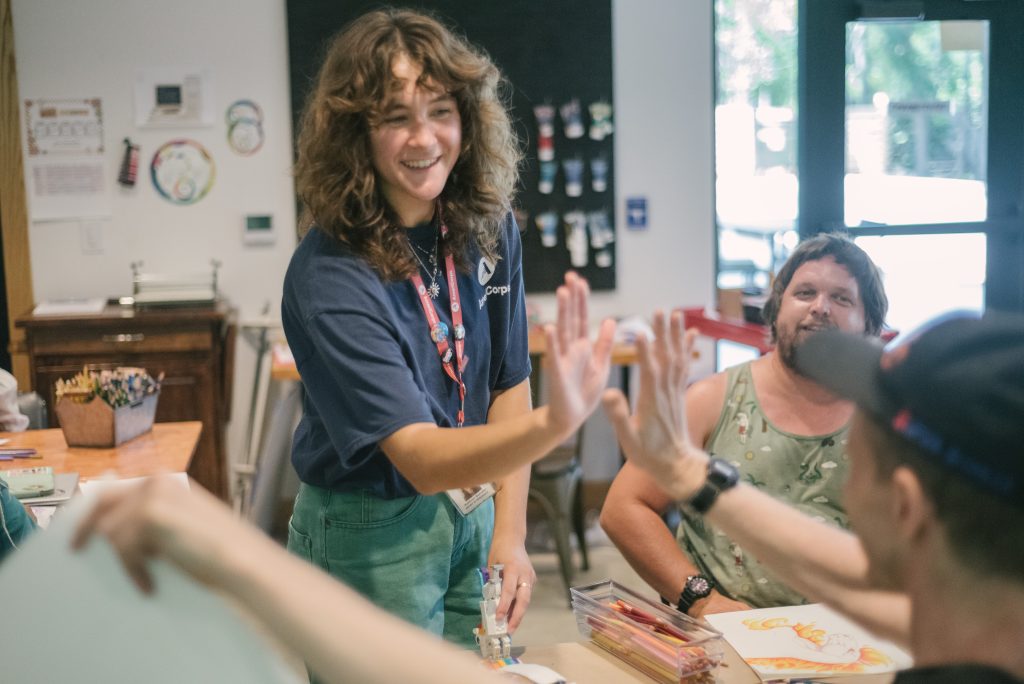
Where Connection Builds Resilience: How Investing in AmeriCorps Transforms Communities, Saves Money & Changes Lives

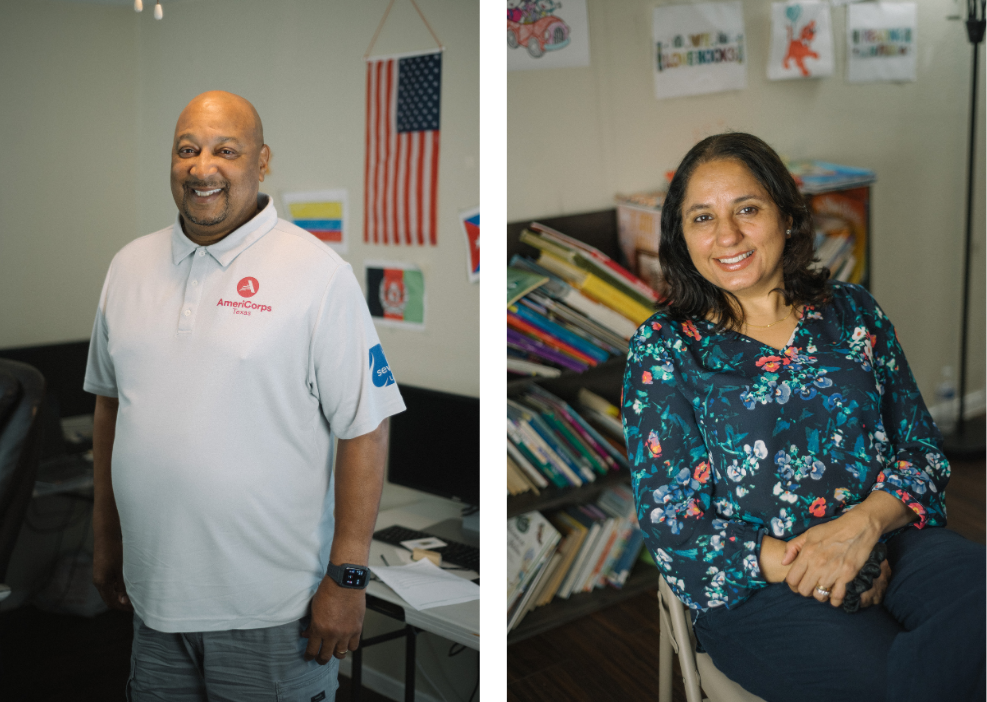
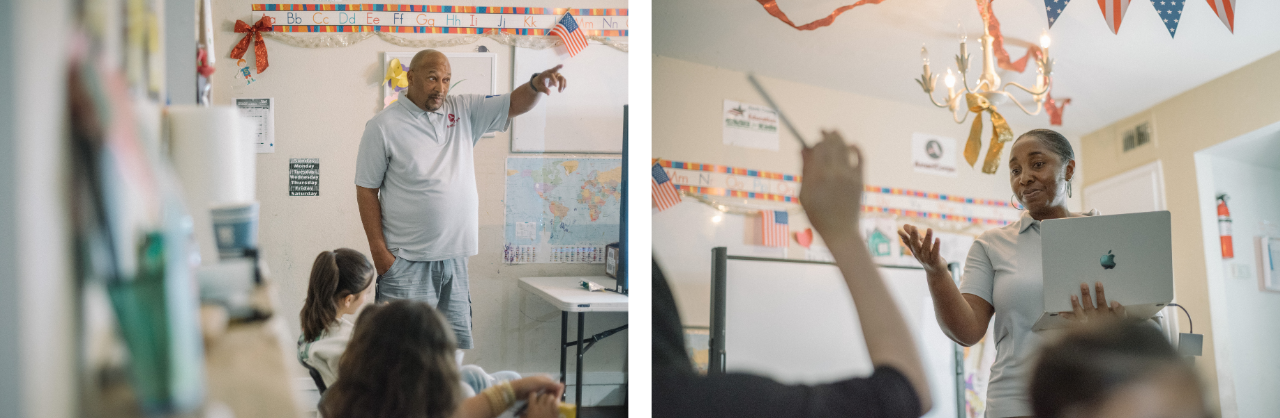
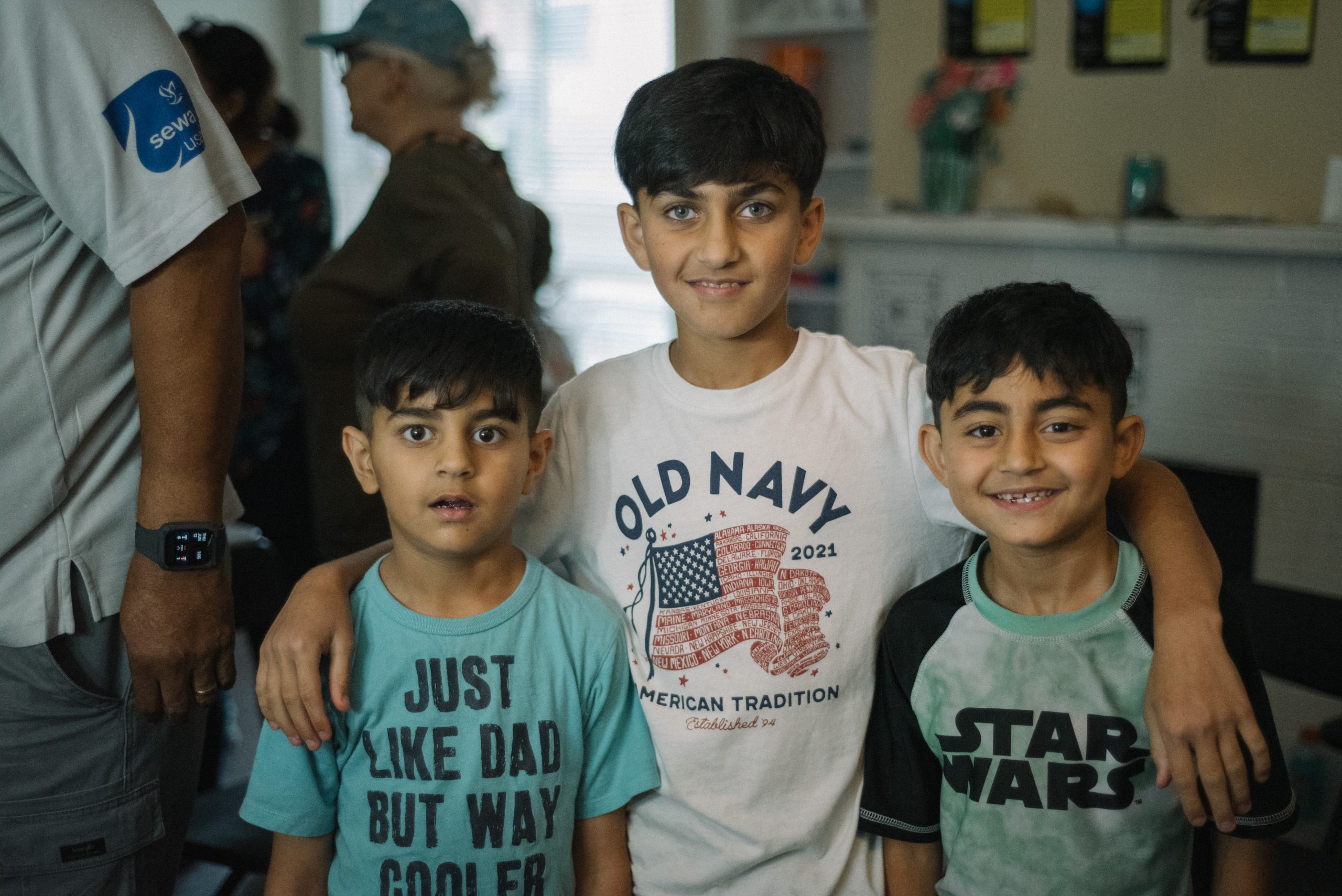
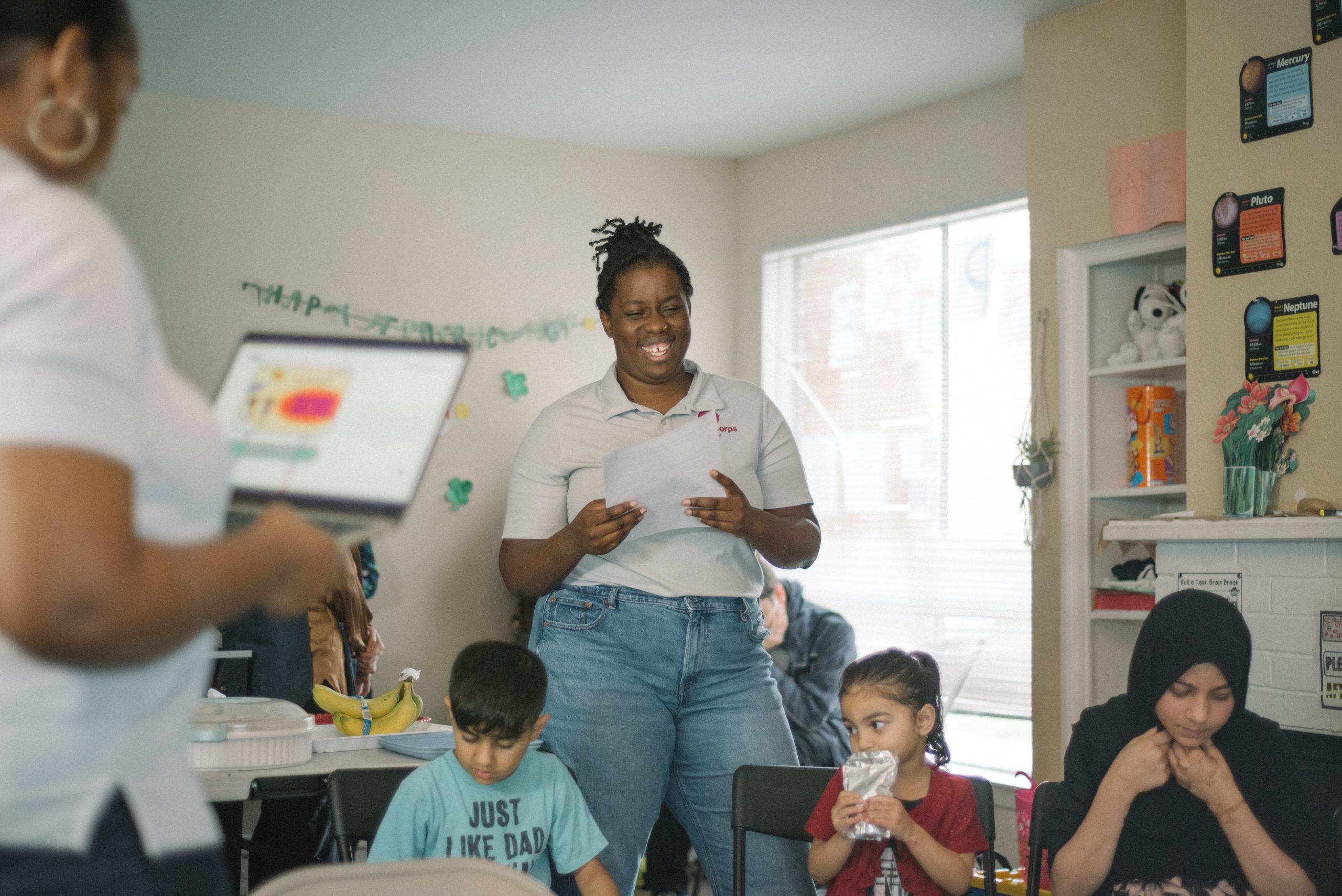
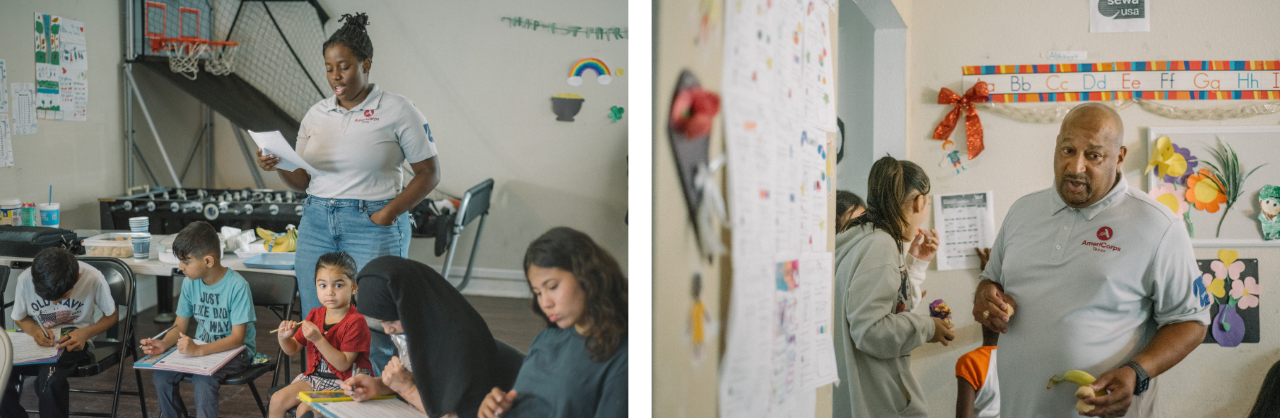
In a converted apartment where children’s artwork mingles with AmeriCorps logos on the walls, twelve-year-old Hadisa raises her hand with quiet confidence. The space buzzes with the animated chatter of refugee children, their voices reflecting a multitude of countries and languages, while red, white, and blue streamers flutter overhead. This modest community center, nestled within an apartment complex that houses Houston’s newest Americans, has become something remarkable: a launching pad for dreams and a fortress against despair.

Hadisa’s transformation tells the larger story. Eighteen months ago, this shy Afghan girl struggled with reading and carried the weight of a homeland torn by war. Today, she speaks with determination about becoming a police officer—one who will “help my community.”

Her metamorphosis didn’t happen by accident. It’s the result of a partnership between AmeriCorps and Sewa International, a humanitarian organization whose motto—”Together We Serve Better”—has become a lived philosophy creating ripple effects throughout Houston’s most vulnerable communities.

The Economics of Hope

We are part of community resilience. We believe that prevention is always good. If you build a more resilient community, during disaster or emergency times, communities are more prepared to face the disasters, and it reduces the anxiety component when those things happen... With the program that we have from AmeriCorps, we got involved in the 'blue sky' preparations—our members are there in the community preparing them, and it's known that if you invest a dollar in preparation, it saves at least $13 post disaster.

Tarvinder Taneja, who manages community resilience for Sewa’s AmeriCorps program speaks with the precision of someone who spent twelve years in biological research before discovering the immediate impact of community service. “Every dollar invested saves $13 during recovery,” she explains, referencing the stark economics of disaster preparedness as calculated in a recent report from the U.S. Chamber of Commerce. But in Houston—a disaster-prone city that most recently faced Hurricane Beryl last July and devastating windstorms last May that left much of the city powerless—the mathematics of community investment extends far beyond dollars.

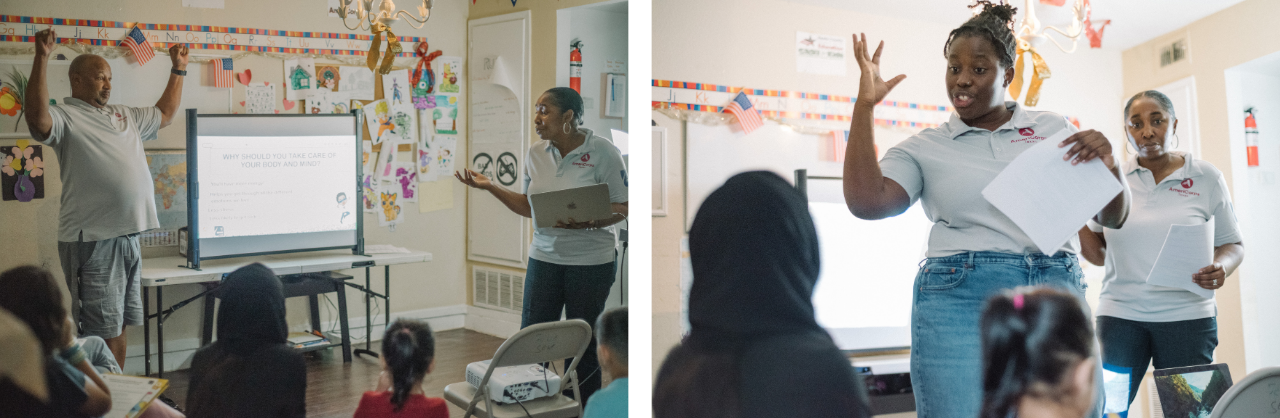
The AmeriCorps program has fundamentally shifted Sewa International from reactive disaster response to proactive community building. “Sewa has always been involved in the recovery aspects when the disaster happened, but with the program that we have from AmeriCorps, we got involved in the ‘blue sky’ preparation,” Tarvinder notes. In workshops held in community centers like Hadisa’s, AmeriCorps members set up small televisions on folding tables, arrange chairs in circles, and create spaces where “the energy is interactive, engaging, and friendly.”

These intimate settings allow for the kind of trust-building that transforms abstract preparedness into lived knowledge. “A lot of people don’t know not to light the candle because of carbon monoxide safety,” Tarvinder explains. “Unless we re-emphasize these things, it doesn’t strike your mind when a disaster happens.” The goal is building “muscle memory”—automatic responses that can save lives when crisis strikes.

Anthony Powell
Tarvinder Taneja

The Art of Being Subtle

Anthony Powell embodies AmeriCorps’ capacity to unlock human potential at any age. Wearing his AmeriCorps shirt with unmistakable pride, Anthony’s journey from oil refineries to mental health specialist reveals the program’s transformative power. At age 60, after massive layoffs at the University of Houston Downtown where he was pursuing his master’s degree, a friend’s suggestion to rejoin AmeriCorps seemed almost too convenient to be real.

When Sewa AmeriCorps Program Director Carole Juárez called the next day, Anthony’s disbelief was palpable: “Right now it’s not the time to give me a prank call…You called me the next day, and when you called me, you asked me to come into your program in mental health, and I’m studying mental health. This can’t happen that fast.”

But it was real, and Anthony’s AmeriCorps experience has taught him what he calls the art of becoming “subtle”—a word he uses with the precision of someone who has discovered its deeper meaning rooted in humility and openness. “Subtle means accepting and understanding what you’re doing in the position. The situation where you’re at is much more than just where you’re at.”

This subtlety manifests in Anthony’s work with children like Hadisa. His approach combines practical mental health tools with genuine connection. “He tells us about what you can do so you can stay calm,” Hadisa explains. “He said if you are emotional, you can just take deep breaths and you can calm down.”

The impact is immediately visible in Hadisa’s transformed mornings. Where she once felt “tired” and resistant to interaction, Anthony’s guidance helped her become more open as only teenage girls can be: “When I wake up, I let people talk to me and stuff.”

 T hey kept giving me the opportunity and the responsibilities to better myself within the program. It was like baking good chocolate chip cookies: once they come out the oven, I couldn't wait to take a bite, and I've been taking the bite ever since. Ingredients would be leadership initiative, sensitivity, partnership development, patience—all those things... I used to wanted to do thing quickly. I learned to become subtle through AmeriCorps.

Breaking Barriers Through Connection

Anthony’s connection with youth transcends typical program boundaries. During his first presentation at the community center, faced with children who didn’t speak much English and “were scared to be here,” he made an intuitive decision that revealed his natural teaching gifts. “What I did was we all decided to go walking. We went walking around apartments, and I gave everybody the opportunity to raise their hand and ask a question.”

That simple act—taking learning outside the converted apartment’s walls—transformed both educator and students. “When we finished and we all came back to the center…I had the attention of all the kids…I realized that at that time, I was a teacher.”

For Hadisa, this personal attention has meant concrete improvements. “One time I asked them, ‘Can you help me with reading?’ because I wasn’t good at reading before I came here. Then they started teaching me and stuff.” The understated “and stuff” contains multitudes—not just reading instruction, but the confidence that comes from having adults who listen, who see potential.

Tarvinder, who also oversees Sewa’s community health and mental health outreach, observes this connection in Anthony’s work: “Language, culture, there are a lot of barriers here. So first, breaking those barriers and telling them they need to take care of themselves, both physically and mentally, to build a more resilient community, is important.”

The Holistic Vision

Sewa International’s programming reflects what Tarvinder calls a “holistic approach” to community building. The organization doesn’t address disasters in isolation, but recognizes the interconnected nature of community resilience. Physical health, mental wellness, disaster preparedness, and educational support weave together into a comprehensive system.

“It’s not just serving the kids—their parents, their communities together, because if just a kid is uplifted and their family is not, it is going to impact the kid when the kid goes back to the family in the evening,” Tarvinder explains.

The diversity of AmeriCorps members strengthens this approach. Tarvinder recalls the striking age range: “At one point in time, our AmeriCorps members were—one was 18, the other was 82.” One older member, a retired engineer, exemplified the program’s transformative power. After six months of service, his family called Tarvinder: “We are so impressed to see our family member. And he has become a better human being by serving the community.” He had gained what his engineering background couldn’t provide—essential soft skills.

 Building resilience is like a very holistic approach we have to take. We want individuals to be more healthy, both physically and mentally. So for us to de-stigmatize the topic of mental health and even talking about prevention, how to take care of your health is extremely important.  Exercise, eating healthy, talking to the kids is a part of more resilient community. Our members have been doing these workshops in these communities and talking about different areas of both mental health and physical health... Prevention is always better than cure.

The Invisible Cape

AmeriCorps gives a regular person that golden opportunity to catapult themselves into a position of support. We as human beings, we need support... AmeriCorps does that: it supports. When these high school [kids] come in and they got their [AmeriCorps] shirts on, I just want to cry because they just don't know that they got a Superman cape on. They can't see it yet.

Anthony’s passion for AmeriCorps extends beyond his current role. He sees the program as a launching pad for ordinary people to achieve extraordinary impact. “AmeriCorps gives a regular person that golden opportunity to catapult themselves into a position of support,” he says.

His metaphor for new members reveals his deep belief in the program’s power: “When these high school [kids] come in and they got their [AmeriCorps] shirts on, I just want to cry because they just don’t know that they got a Superman cape on. They can’t see it yet.”

This invisible cape represents potential unlocked through daily acts of service. Anthony’s own journey from someone who felt nobody else would give him an opportunity to a PhD candidate illustrates this transformation. “It’s like somebody walks up to you and gives you keys to a brand new car and the title…But that’s the way I felt when I came upon AmeriCorps.”

Expanding Impact

Preparedness, resilience, and partnerships have also gone up. When we have more partners, more collaborations, we are able to serve better. AmeriCorps program has not just brought more organized service in the community, but also building partnerships and serving together and more outreach. It has expanded.

The partnership with AmeriCorps has exponentially expanded Sewa’s capacity to serve. “Our presence in the community has expanded. Preparedness, resilience, and partnerships have also gone up,” Tarvinder notes. Unlike volunteers constrained by time limitations, AmeriCorps members provide consistent presence that allows for relationship building.

“We have committed members who are doing this service year-round and making the community individuals more prepared, more resilient,” Tarvinder explains.

For Hadisa, this consistency has provided stability in a life marked by displacement. When AmeriCorps members ask “What do you want to be in your future…who did you help?” they’re communicating that her future matters, her contributions count.

Building Hope for Tomorrow

AmeriCorps was giving me an opportunity to challenge myself to see how high or how strong I could be...  That's the perks of the job. That's the grand tour of the service that I have had the opportunity to provide each day that I wake up and I put the [AmeriCorps] shirt on, because this shirt means something to me... It's a badge of honor.

In the converted apartment where children’s dreams cover the walls alongside disaster preparedness posters, three very different people—a twelve-year-old Afghan refugee, a 60-year-old PhD candidate, and a research scientist turned community organizer—find common purpose in building resilient communities.

Anthony captures this when he describes wearing his AmeriCorps shirt: “Because this shirt means something to me. Because if it means something to me, it means something to others.” It’s a badge of honor representing collective commitment to the idea that communities can be stronger, that prevention is possible, that ordinary people can create extraordinary change.

As Hadisa continues growing into her dreams of service, as Anthony advances toward his goals of expanding mental health support, as Tarvinder continues building disaster-resilient communities, they embody Sewa International’s fundamental truth: together, we serve better.

The AmeriCorps shirts may not be visible Superman capes, but in Houston’s community centers and disaster preparedness workshops, in improved reading scores and calmer morning routines, their power is undeniable. Together, they build hope.

Interviews, photography, editing & prompting by Joshua Winata

Written with AI assistance

Where Medicine Meets Mission: How AmeriCorps Creates Healthcare Heroes Rooted in Community

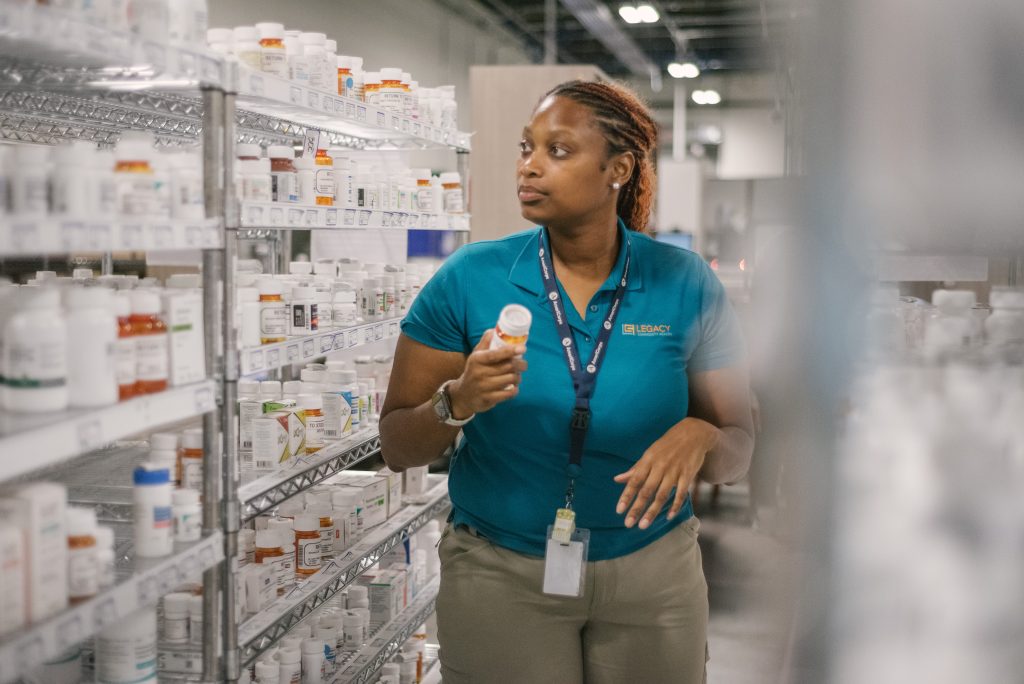
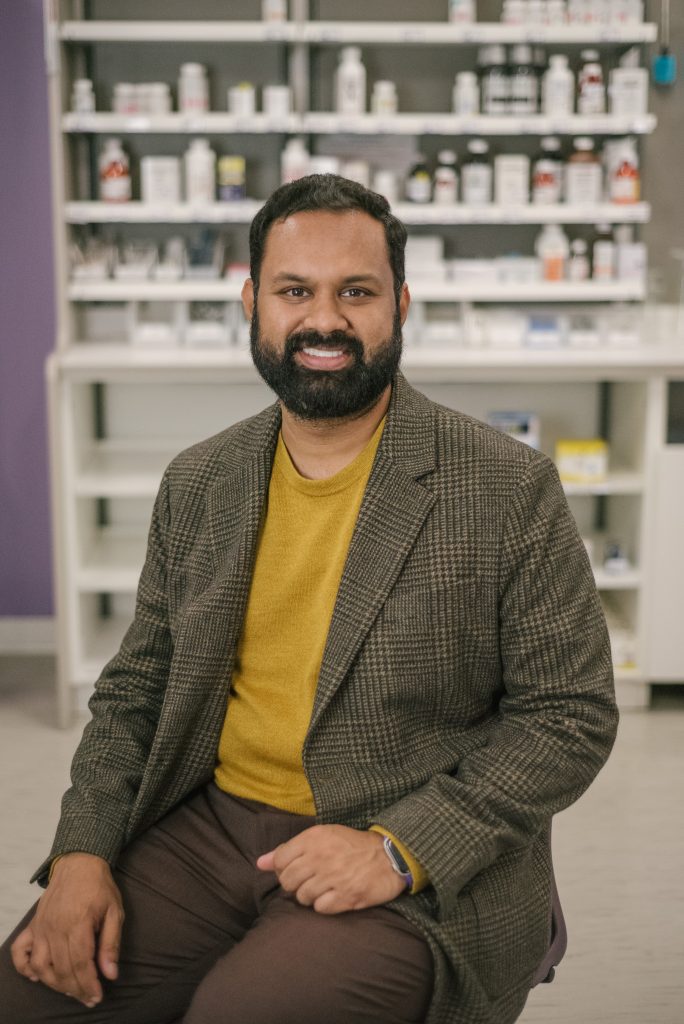
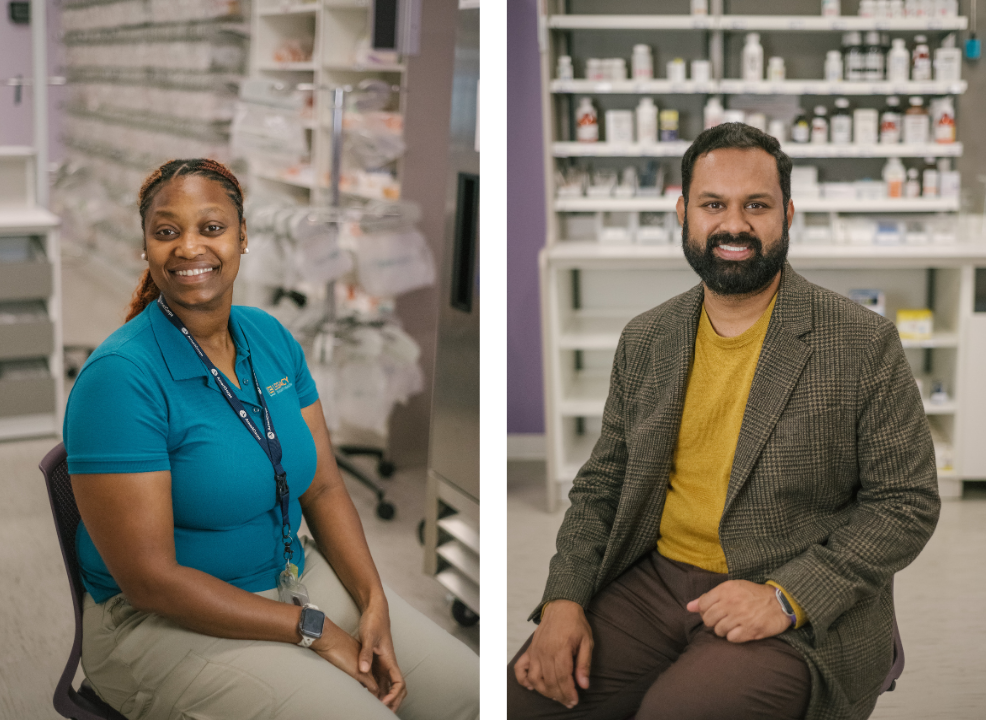
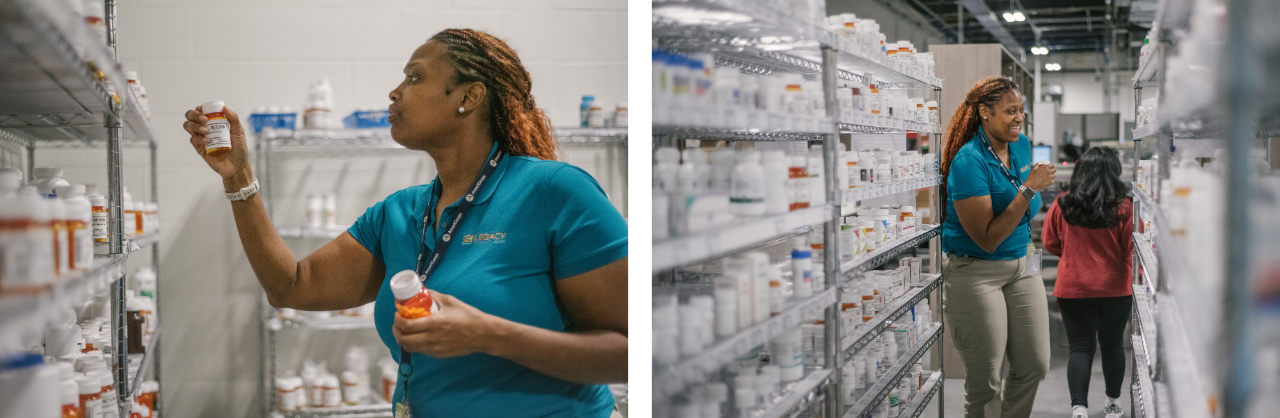
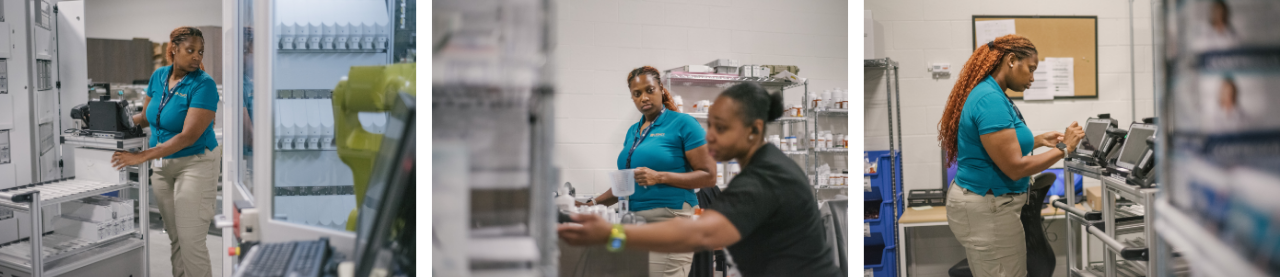
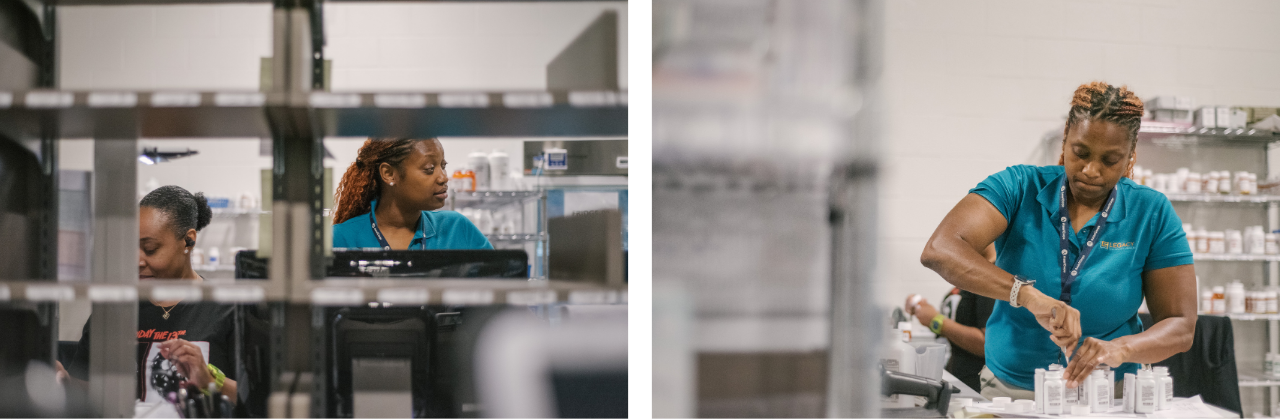
In the bustling pharmacy at Legacy Community Health‘s central facility, giant mechanical arms move with precision like oversized claw machines, plucking medications from towering racks while a complex conveyor belt weaves through the space, delivering prescriptions with clockwork efficiency. Amid this choreographed chaos, Amber Henry replenishes the robotic systems that serve as the arteries of healthcare for Houston’s underserved communities.

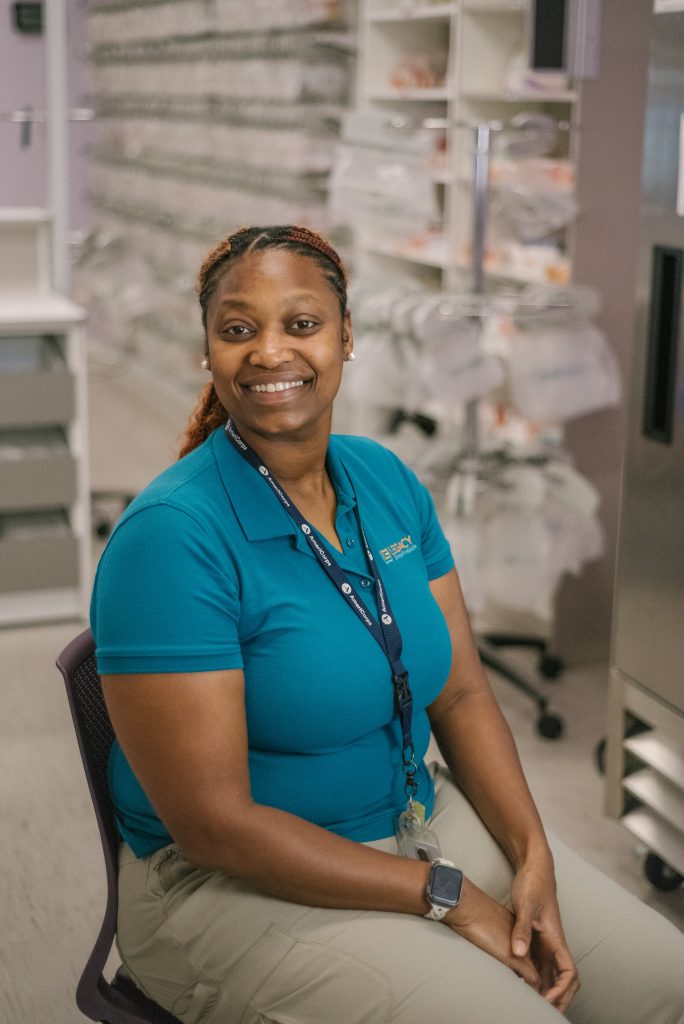
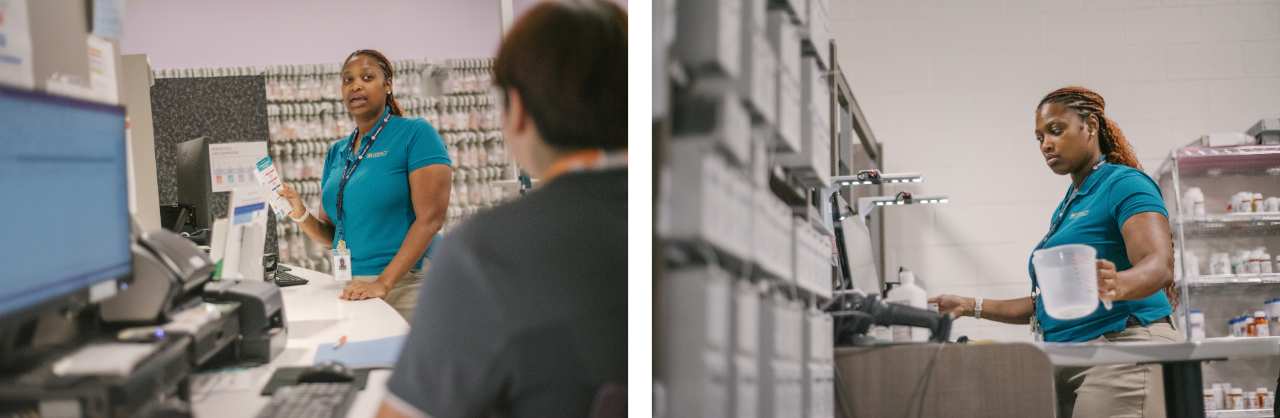
But for Amber, a 37-year-old AmeriCorps pharmacy advocate, the real medicine happens in the spaces between—in the conversations with patients who’ve never had someone explain their medications, in the phone calls navigating insurance labyrinths, in the moments when healthcare’s intimidating complexity gives way to human understanding.

“Just because you and I have those opportunities doesn’t mean everybody does,” Amber reflects, her voice carrying the weight of personal experience. “So we want to make sure that everybody has the same advantage, right? And healthcare for me allows me to do that.”

Amber’s path to this moment wasn’t linear. Armed with degrees in biology and Spanish, she worked as a claims adjuster before deciding to pursue nursing while simultaneously serving with AmeriCorps—a juggling act that nearly broke her until she realized her exhaustion would become “a testimony for someone else thinking that they can’t do it.”

The Human Cost of Healthcare's Maze

" Healthcare is incredibly complex. It's hard to navigate through. We need a lot of boots on the ground. That's really where AmeriCorps comes in. They serve as extensions of the community health centers, they serve as extensions of pharmacists, they serve as extensions of providers. They basically help connect people to care. Especially here in Texas where we have a lot of clients that are uninsured or health illiterate, we need those extra hands, and AmeriCorps really serves in that gap."

Kevin Aloysius, Director of Pharmacy Operations at Legacy Community Health, has witnessed firsthand what happens when healthcare’s complexity overwhelms those who need it most. In a system where patients require “30 to 45 minutes of going and talking to them about their health condition, their medications,” traditional staffing models fall short. 

“Healthcare is very complex,” Kevin explains, “and so there are times when patients are prescribed or given medications by their provider, but they don’t know how to take the medication. They don’t know how to get access to the medication.”

According to the U.S. Census Bureau, Texas has one of the highest uninsured rates in the country, with 16.4% of its population lacking health care coverage.

This is where Legacy’s more than 80 AmeriCorps members become what Kevin calls “connectors”—human bridges spanning the chasm between medical expertise and patient understanding. Across Legacy’s more than 50 locations serving over 250,000 people throughout the Texas Gulf Coast, these young advocates tackle insurance prior authorizations, guide patients through patient assistance programs, and provide the individualized attention that transforms healthcare from a transaction into healing.

“I would call them connectors, actually,” Kevin says. “They link people not only with the client’s health, but also with our providers, with our pharmacists, with various liaisons in the clinic. So they kind of serve as that bridge between all of us.”

Amber Henry
Kevin Aloysius

When Personal Pain Becomes Purpose

For Amber, the motivation runs deeper than job description. When her father passed away last year, she found herself translating medical jargon for her family, filtering complex information through her nascent nursing knowledge to help them make peace with an impossible situation.

“I was able, for us all as a family, to make the right decision for my dad because ultimately his status was not going to change, but it helped to provide that additional information for them to have some kind of peace with what was going on,” she recalls.

That experience of advocacy born from anguish now extends to her uncle in rural Louisiana, where resources are scarce, and to countless patients who find in Amber someone who understands that healthcare’s greatest barriers aren’t always medical—they’re human.

This shared experience creates authentic connections that traditional healthcare models often miss. “One of the good things about the AmeriCorps members is that they’re able to connect a lot more to our patients as well, because some of the AmeriCorps members have also had these challenges,” Kevin notes.

I wanted to make sure that other people had the same opportunities that I have. Just because you and I have those opportunities doesn't mean everybody does. So we want to make sure that everybody has the same advantage, and healthcare for me allows me to do that.

Reaching the Unreachable

The transformation becomes tangible at community health fairs, where Legacy’s AmeriCorps members venture beyond clinic walls to meet people where they are. At the annual Lyons festival, a woman in her sixties approached their booth for a free blood sugar reading—the kind of simple gesture that can reshape a life.

Her glucose was dangerously high. She hadn’t seen a provider in years, worried about costs she couldn’t afford. But the AmeriCorps member didn’t just deliver bad news—they delivered hope. They explained Legacy’s sliding scale services, connected her with free blood glucose monitors, and discovered she was managing over 30 medications alone. “She said it was the first time that someone actually spent the time to talk to her… about her medications,” Kevin recounts. What began as a festival stop became a comprehensive care plan, complete with pharmacy transfers and home delivery service for someone living 45 minutes away.

“This wouldn’t have happened previously because we are not out there in the community sometimes doing health fairs. But the AmeriCorps presence out there in the community, we’re able to catch people, and share them the knowledge and also connect them to care.”

Building Tomorrow's Workforce, One Connection at a Time

AmeriCorps doesn’t just fill immediate gaps in service—it also cultivates a healthcare workforce uniquely attuned to community needs. Amber’s simultaneous pursuit of nursing school while serving as a pharmacy advocate exemplifies this dual pathway, where service and professional development intertwine.
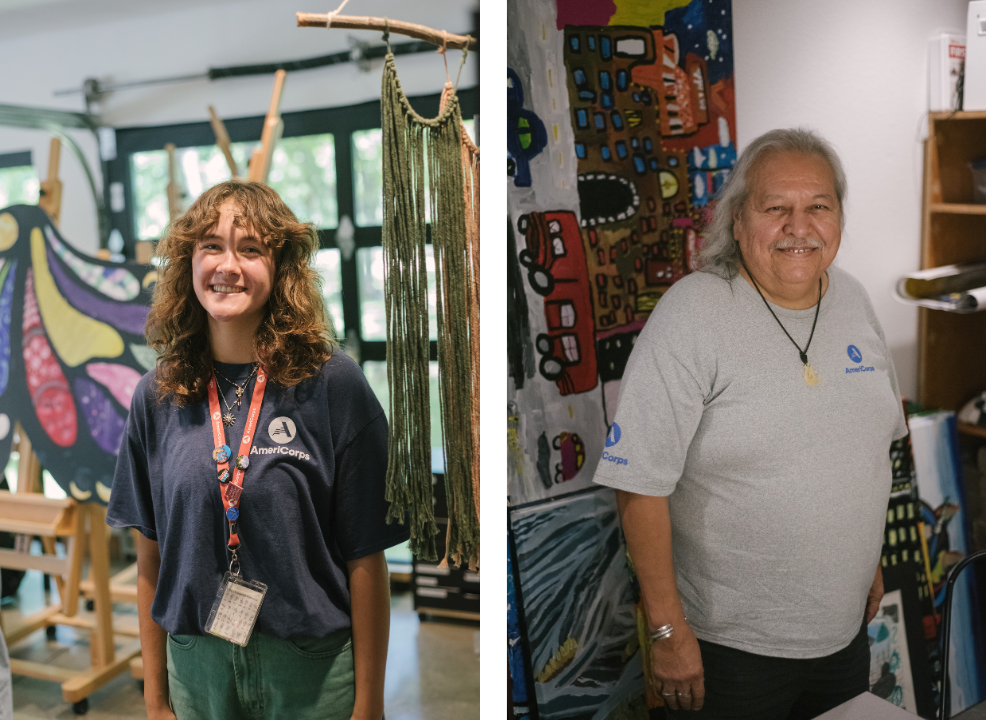
“AmeriCorps led me to that decision because they helped me to realize just how much it is needed to have people to advocate and to have people to bridge those gaps,” Amber says of her choice to pursue an Advanced Practice Registered Nurse degree.

The program’s innovation extends beyond individual career development. AmeriCorps members have redesigned vaccine flyers to be more patient-friendly, organized HIV education conferences for college students, and even introduced wellness competitions using walking apps across Legacy’s four pharmacy locations.
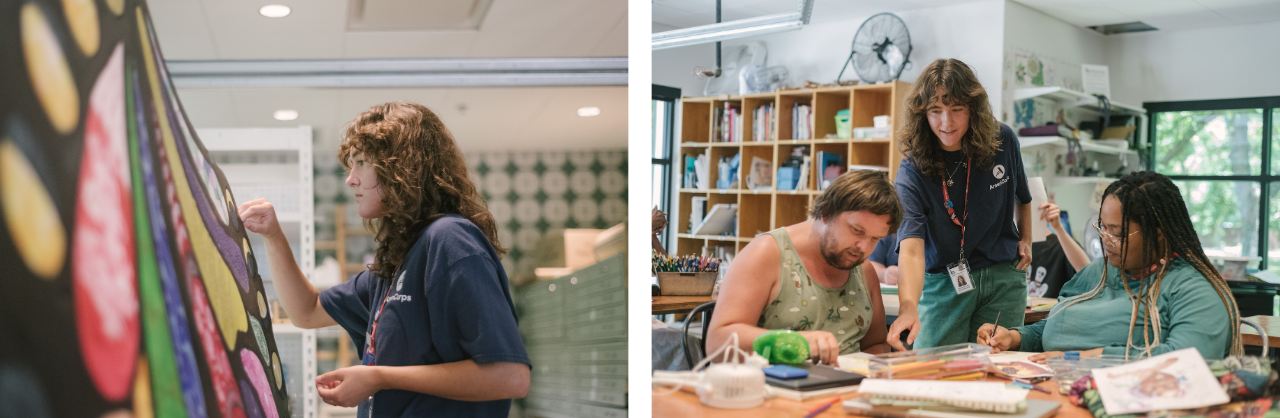
“Something I wouldn’t have thought about,” Kevin admits about the walking challenge. “So I would say AmeriCorps members bring a little bit of tech savviness to our institutions as well.”
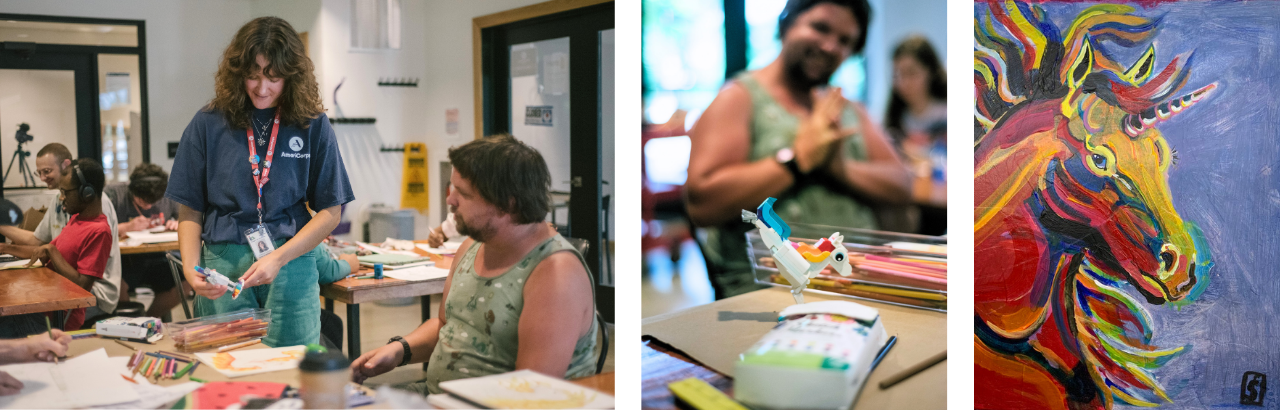
The Irreplaceable Human Element

It has definitely touched a lot of lives here at Legacy, both on the patient side and on the healthcare side. We're appreciative for the energy they bring in. We see our future leaders of America in these AmeriCorps... I see the excitement, I see the ambition, I see the heart for service."

In an era of increasing automation—symbolized by those mechanical arms sorting medications—the most profound healthcare innovations remain fundamentally human. Amber has learned that “listening is just as important” as speaking, describing it as “a lost skill” that creates belonging for people often marginalized by healthcare’s complexity.

“At that point in time when they’re at those events, they are a priority,” she reflects about community health fairs. “Just being able to be there for them and being a listening ear, I think it’s just as important to listen as it is for speaking.”

For Kevin, who left a comfortable grocery store pharmacy position seeking greater purpose with community clinics, AmeriCorps members represent more than workforce development—they embody healthcare’s future. “We see our future leaders of America in these AmeriCorps. I see the excitement, I see the ambition, I see the heart for service.”

The Testimony of Transformation

AmeriCorps means so much to me. It's not just about serving and committing to hours and reaching those hours. It's about the feeling that you get doing the service. It's about the people that you meet, the connections that you make…  Just having that sense of belonging, that community, it really helps people to be motivated and keep going no matter what your circumstance is.

As Amber juggles nursing school, AmeriCorps service, and part-time work, she draws strength from knowing her struggles will inspire others. “This is going to be a testimony for someone else thinking that they can’t do it. And me reassuring them, you can.”

The testimony extends beyond individual achievement to systemic change. In communities where residents may go decades without healthcare, where insurance forms remain incomprehensible mysteries, and where the distance between “haves and have-nots” can be measured in miles to the nearest clinic, AmeriCorps members serve as essential translators of hope.

“AmeriCorps means so much to me,” Amber concludes. “It’s not just about serving and committing to hours and reaching those hours. It’s about the feeling that you get doing the service. It’s about the people that you meet, the connections that you make…  Just having that sense of belonging, that community, it really helps people to be motivated and keep going no matter what your circumstance is.”

In Legacy’s bustling pharmacy, those connections ripple outward like medications moving through conveyor belts—reaching patients who thought quality healthcare was beyond their grasp, training future providers who understand that healing requires both clinical expertise and profound humanity, and proving that America’s most complex healthcare challenges demand its most compassionate solutions.

“Without AmeriCorps, I don’t see myself being where I’m at today,” Amber says—a sentiment that echoes through examination rooms and pharmacy counters across the Texas Gulf Coast, where young Americans are discovering that the shortest distance between sickness and health often runs through the human heart.

Interviews, photography, editing & prompting by Joshua Winata

Written with AI assistance

Where Everyday Magic Happens: Art, Dignity, and the Transformative Power of AmeriCorps

In a sun-washed studio tucked in the heart of East Austin, the walls breathe with the stories of artists who have found not only their voice, but their purpose. There are no sterile corridors here—just bright windows, bustling tables, and the scent of paint drying on canvas. Art is everywhere: stacked on shelves, propped against walls, waiting for their turn to be seen.

This is Imagine Art, a nonprofit that for nearly three decades has served as both sanctuary and springboard for adult artists with disabilities. It is a place where brushstrokes are more than aesthetic—they are assertions of identity.

And in recent years, that identity has been strengthened by a powerful force: AmeriCorps.

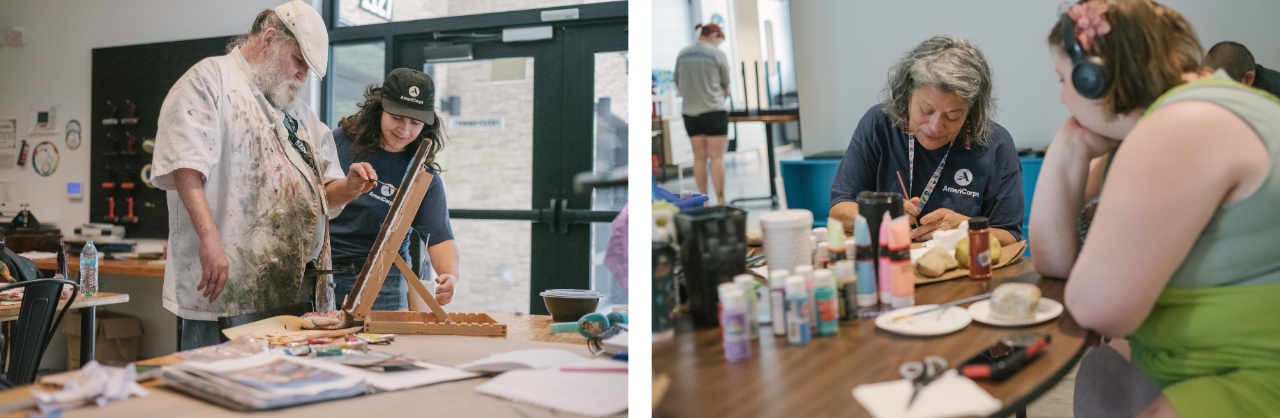
At Imagine Art, AmeriCorps members aren’t just assistants or facilitators—they are mentors, collaborators, and, often, fellow artists themselves. They bring time, talent, and a listening heart to a community that thrives on expression. Together, they are reframing not only canvases, but the systems that have long failed to support people with disabilities.

Service in Strokes: The Role of AmeriCorps Members

 Every day magic happens at Imagine Art. All I have to do is walk out the door and I see it...   It could be an interaction between somebody and their object and their craft. All of a sudden there is this profound moment where they realize something wonderful that they'd just never seen before...  It's about maximizing yourself as a person. It's an easy place to make that happen.

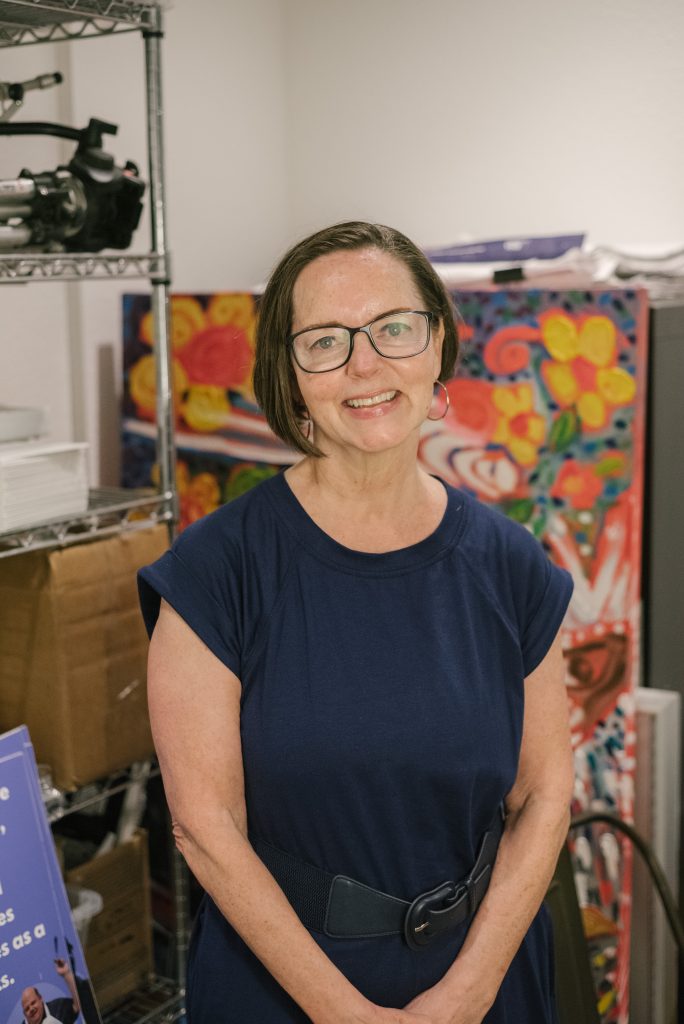
“Our members come to serve as artists-in-residence,” said Rick Hernandez, Director of the AmeriCorps program at Imagine Art. “They serve as instructors and mentors. They work side-by-side with the artists and teach them new skills. Our real goal is to assist them in becoming job-ready… It’s about getting them to the point where they not only can produce the art, but they can represent it. They can discern the quality. They can decide when it’s finished.”

Before AmeriCorps, the organization was overextended. “We had 60+ artists coming in daily to work in the studios, and we had two instructors… It was a capacity issue,” Hernandez said. “The AmeriCorps program really changed our world in that sense because it gave us the capacity to truly be able to serve the artists and to focus on a goal.”

Each year, about 25 AmeriCorps members support up to 65 artists with unique physical, intellectual, and psychological disabilities—adding not just hands, but heart and dignity to the mission. 

“It’s not just about learning to paint. It’s not just about learning to mix color,” Hernandez emphasized. “It’s about studio habits. It’s about understanding the business of the arts. It’s about them being able to represent their work to a potential buyer. It’s about them being able to archive their work, to inventory it, to recognize its value… Those are kinds of things that are happening between our members and our artists daily. That’s the kind of engagement that is happening. The members are engaging the artists fully.”

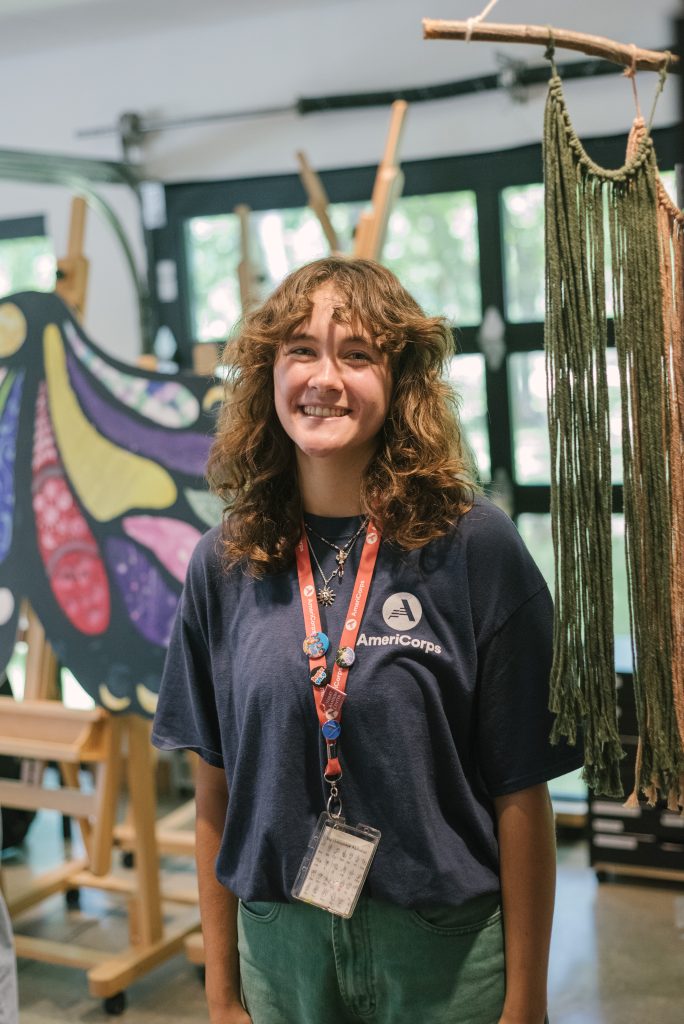
Kathryn Schulze
Rick Hernandez

Finding Purpose at the Crossroads of Creativity and Care

Before she ever stepped into the Imagine Art studio, Kathryn Schulze was learning how to serve—not in a classroom, but at the grocery store and in strangers’ living rooms, watching her mother offer kindness to women in crisis.

“My mom basically helped women in crisis pregnancies,” Kathryn said. “She would go to the grocery store with them and help them use their SNAP benefits… We would go and collect clothes for them or literally just anything else they needed.”

Even as a child folding donated clothes or tagging along on shopping trips, Kathryn sensed the quiet power of those small, faithful gestures. “It was really cool getting to meet the people that she was working with… Seeing my mom serving the community, it taught me that it’s about the connection and building those personal relationships and seeing the confidence just grow. Feeling loved and cared about is what really made the big difference.”

So when Kathryn found herself unsure of her path after college—her sociology degree in hand and art still just a personal outlet—it was that early imprint of service that guided her toward AmeriCorps. “I always knew I wanted to do something helping a community,” she said. “I had no idea that I could incorporate art into that… AmeriCorps had the perfect mesh of those.”

What she found at Imagine Art wasn’t just a job, but a place that would shape her voice, confidence, and future.

“The artists here have taught me to be more brave with my work and just to take risks,” she said. “I’m inspired by them literally every single day.” That inspiration has spilled into her personal art practice—prompting her to participate in art markets, receive commissions, and even show in galleries. “If I wasn’t working here, I don’t think I’d be nearly close to where I am now in my personal practice,” she said. “Working here has just jump-started everything for me.”

Beyond technical skills, Kathryn speaks of something more essential. “It’s really taught me to trust myself,” she said. “Now I feel like I second-guess less… I’m just trusting that I can do this, and I’m going to try this. If that doesn’t work, that’s fine—I’ll try the next thing.”

Having that intersection of art and service, is what really drew me to AmeriCorps... Seeing my mom serving the community, it taught me that it's about the connection and building those personal relationships and seeing the confidence just grow. Feeling loved and cared about is what really made the big difference... I wanted to keep it at that intersection of art and healing and art and growth and confidence building, which is really why I think what Imagine Art does is so cool because it is all of those things.

Kathryn and the Horse Painter: A Story of Mutual Transformation

One of Kathryn’s first clients at Imagine Art was a charismatic artist with developmental disorders named Steven Fisher, “known for his passion for horses and intricate depictions of them. Many of the colorful mares, colts, and stallions that Steven illustrates and paints, have elaborate backstories. Working mainly in watercolor on paper and acrylic on canvas, he has a knack for giving each horse a unique personality,” according to his artist bio.

“He is also just one of the most gracious people I’ve ever met. And he’s super appreciative and is always giving people words of affirmation. He’s really encouraged me too with my own art,” Kathryn said. “It’s just been really cool to see him grow and gain confidence as an artist too. We’ve become good friends for sure.”

For Steven, the feeling was mutual. “She’s really friendly, helpful,” he said. “She’s helpful when I don’t remember something, like not knowing how to shade that much, she helps… The support she gives is unique.”

Steven, who’s been coming to Imagine Art for more than six years, finds joy and dignity in the creative process. “I come for opportunities,” he said. “It brings more audience. They really like my stuff I present. It makes me feel really nice to share with the audience what they want. I think it’s the beauty of it.”

Rick has noticed recent changes in Steven’s skill and confidence:  “What I’m seeing right now is that the quality of his work, the quality of his brushstroke, the quality of his design decisions, the quality of his color choices—all of that is improving radically. And that’s because [Kathryn] sits right next to him every day and one-on-one guides him… and the value of that, you just can’t beat it. It’s just profound.”

 ”There is this continuum of consistent attention and provision of valuable service that ultimately gets one to that place,” he adds. “He’s always painted well… But the quality of it that I’ve seen literally in the last couple months since she’s been working with him is just extreme… And that has everything to do with Kathryn’s interaction with him. It’s about consistent, good quality attention and mentorship.”

Kathryn reflects that her own sense of purpose has grown alongside Steven’s. “The clients, the artists we serve, they give you unconditional care and respect and love and make you feel good about what you’re doing no matter what,” she said. “It’s shown me that just showing up and doing good work, as long as your intentions are good and to serve and you really want to help, that’s enough.”

Trust as a Pathway to Leadership

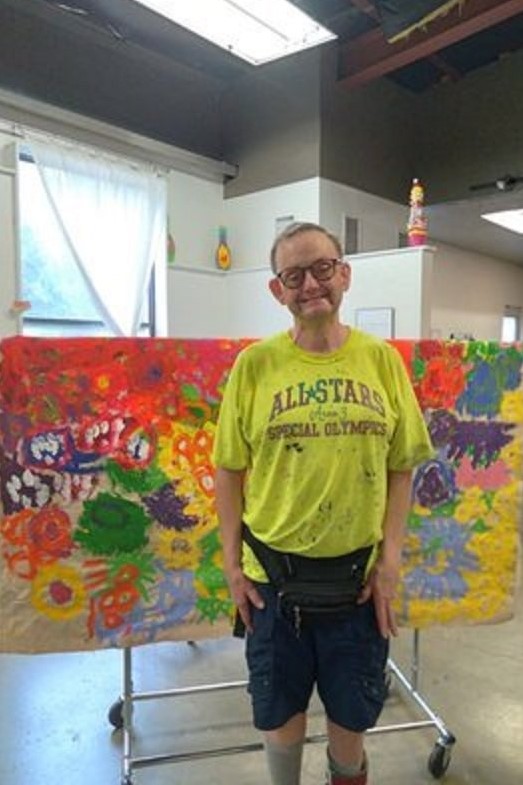
John Molina doesn’t just make art—he makes things happen.

“I paint, and I make my own coloring book and stickers, and I help in the kitchen over there,” he said. “I’m on the board with Debbie… and I’ve been working on different paintings, different abstracts,” said John, who uses “circles, spirals, scratches and negative space to reveal the undercurrents of how his artistic mind works,” according to his artist bio. “ I do flower people paintings. I do big ones and little ones.”

His days are full—organizing events, tracking outings on the calendar, networking potential collaborations, even curating his own shows. “Before TOMS Coffee closed, I did a show there all by myself,” he said, referencing a local cafe. “I was there until 9 o’clock, 10 o’clock setting up, and then I had to pull everything out, and they let me do it there.”

John also values the partnerships with AmeriCorps. “A couple of AmeriCorps members… taught me how to do the base of the painting,” he said. “Because when I do big paintings… if somebody asks for a three-foot one, they have to make sure that I’m ready to do it.”

His mantra is simple but profound: “I trust them because they help me, and they trust me… We do everything we need to do for each other.”

 ​I paint, and I make my own coloring books and stickers... I trust [AmeriCorps] because they help me, and they trust me. And when I trust them, they trust me, and we do everything we need to do for each other.

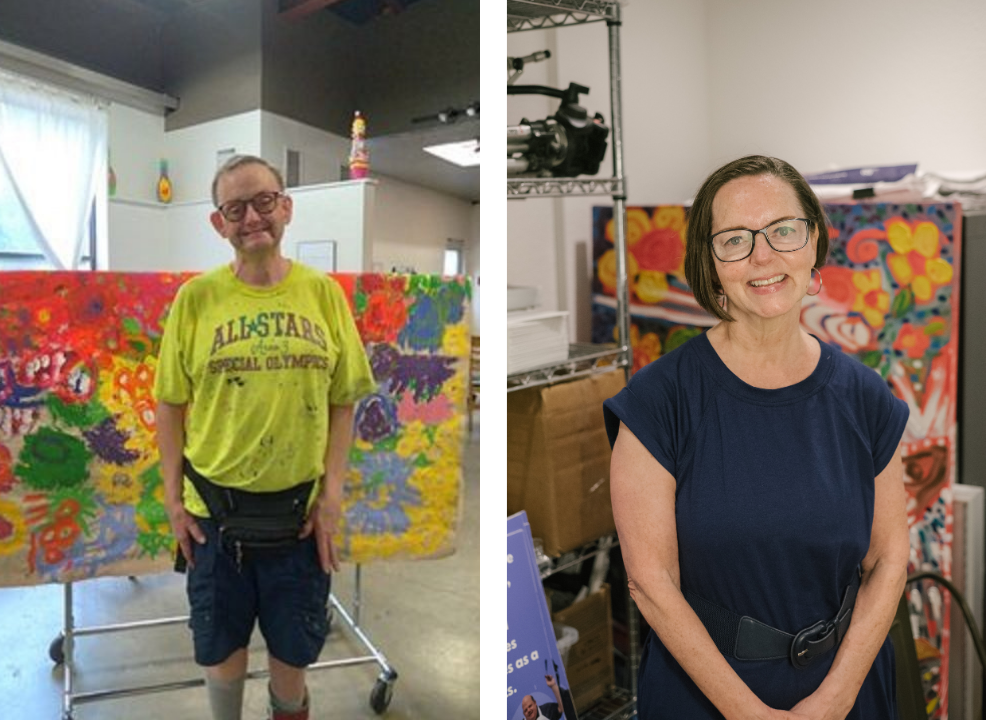
John Molina
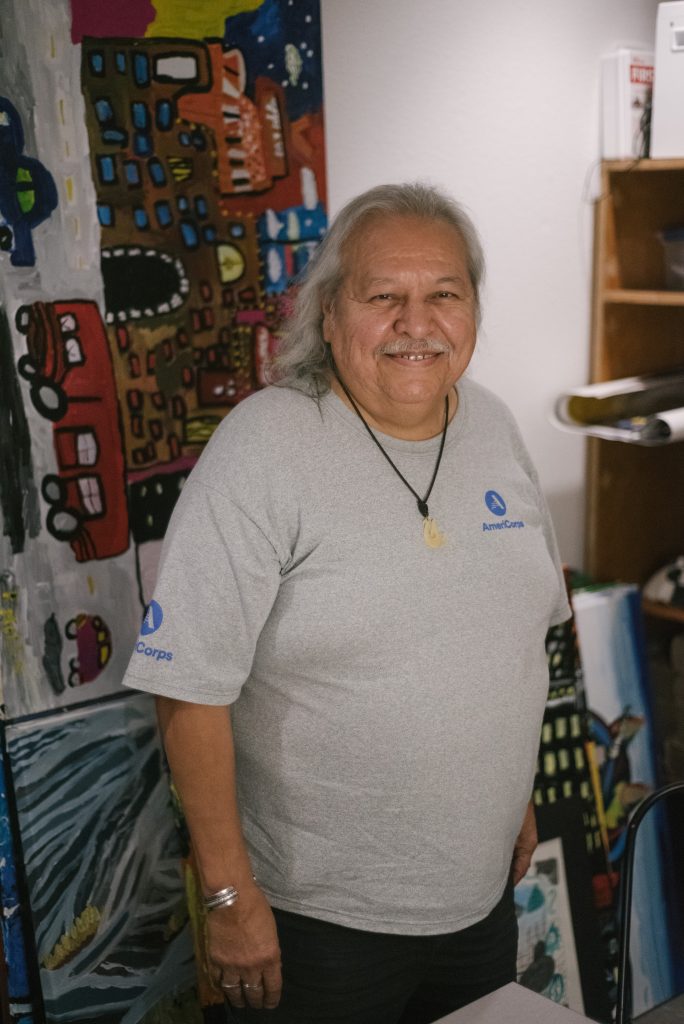
Caroline Molina-Ray

From Passing Time to Building Purpose

Before he was participating in Imagine Art programs, he was in programs that were not suiting his needs... The social interactions were also not as enriching as he needs for his own satisfaction and personal growth. So we were delighted that Imagine Art filled those needs in spades and provided him with creative outlets... It really took his daytime activities to a new level of enrichment, social benefits, and opportunities for growth.

John’s journey has not gone unnoticed by his sister, housemate, and guardian Caroline Molina-Ray. A decade ago, they were searching for a place that could offer meaningful engagement—not just custodial care.

“Imagine Art came into our lives at just the right time. It was really a godsend,” she said.

Today, John is not just an artist but an entrepreneur and community leader. One of Caroline’s proudest moments? The day John published his first coloring book. “It makes for a nice gift. Interspersed among the images… are John’s favorite sayings, and they’re very uplifting,” she said. “‘You’re my friend and I love you’ is just placed in the book as an affirmation.”

Caroline credits AmeriCorps for amplifying that impact. “It’s clear from their focus on serving individual clients, as well as the larger community, that they do this as a labor of love. It’s more a lived experience of giving,” she said. “We wouldn’t be able to see the benefits in the lives of the clients at Imagine Art unless we had such a dedicated and talented group of AmeriCorps members.”

Caroline has a deep appreciation for the AmeriCorps members devoting their time and talent to support artists with disabilities. “ They do it by sitting one-on-one with the artist, helping them to develop their skills, helping them to develop new ideas for their art, helping them to refine the artistic abilities that they already have. They do it by helping artists interact effectively with each other and with other members of the community. So they help artists build social skills and communication skills. They also accompany the artists into the community on field trips, on outings, and help the artists discover how art is integrated into the real world.”

One story stands out in her memory: “We got a little nervous not knowing exactly where we were,” she said of trying to locate a field trip site. “We called the AmeriCorps member… and [she] walked to us and physically ushered us to the right spot. That’s, I think, symbolic of AmeriCorps members playing a leadership role, playing a role as guide, but also just helper and support and trusted friend.”

The Bigger Picture: Art as Infrastructure

Beyond the individual stories lies a broader truth: the arts have economic and social power. According to a recent report by the Texas Cultural Trust, the arts and culture industry has grown more than 30% in the last decade, generating $6 billion annually for the Texas economy and contributing nearly $380 million in state sales tax revenue.

“One of the things that people don’t understand is the value that the arts have on a community from perspectives outside of just engagement,” said Rick, who led groundbreaking economic impact studies as former executive director of Texas Commission on the Arts.

It’s a clean, safe, scalable engine—and Imagine Art is proof that it can also be inclusive.

“Most of our artists will never leave here,” said Rick. “This place is forever for them… This truly is a community. It’s not just a place where you come to learn something and then leave.”

Rick has spent a lifetime championing the arts as public infrastructure. “Everybody’s enjoying it in some way or another and don’t even know it most of the time because they don’t understand the source of what it is that they’re enjoying,” he said.

And at Imagine Art, “everybody involved becomes a beneficiary of this activity.”

A Studio Where Lives Take Shape

Back in the Imagine Art studio, it’s just another day. Paintbrushes are rinsed. Critiques are held. Someone laughs over a half-finished landscape. Someone else leans over a communal table to adjust the edge of a canvas.

It’s not flashy. It’s not headline-grabbing. But it is, as Rick puts it, “everyday magic.”

“All I have to do is walk into one of these rooms, and I see it happening,” he said. “It could be an interaction between somebody and their object and their craft, that all of a sudden there was this profound moment where they realized something wonderful that they’d just never seen before.”

In that moment—in that revelation—is everything: the artist, the mentor, the system transformed.

This is Imagine Art. This is AmeriCorps. This is what happens when service meets soul.

Interviews, photography, editing & prompting by Joshua Winata

Written with AI assistance