
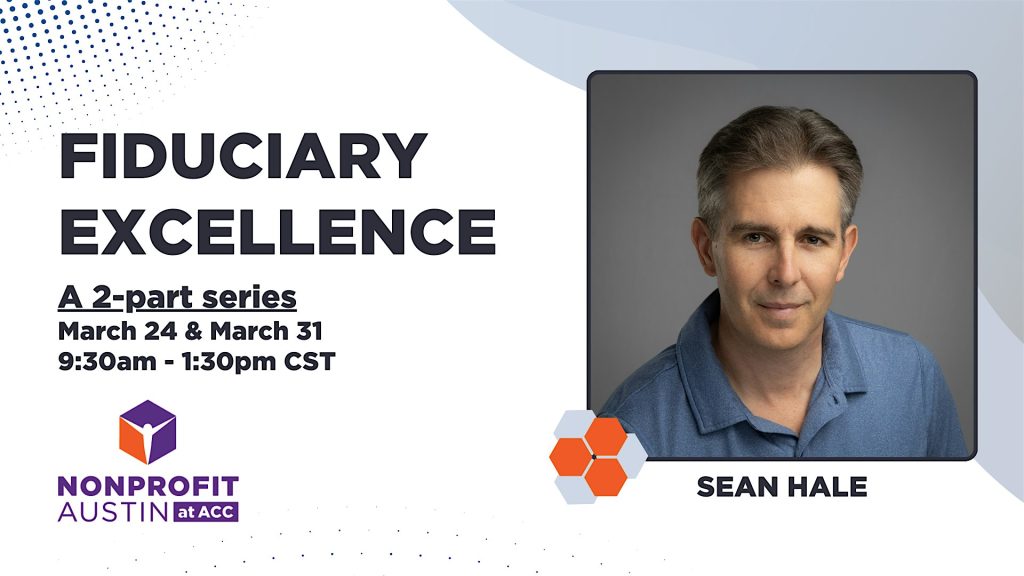
Fiduciary Excellence

Financial decisions shape your mission, team, and future. This course builds the confidence nonprofit leaders need to lead with clarity.
A 2-part series (March 24 & March 31 | 9:30am – 1:30pm CST):
Few nonprofit leaders sign up to be financial experts—but financial decisions shape everything you care about: your mission impact, your team’s sustainability, and your organization’s future. This course gives you the financial confidence and clarity to lead boldly, whether you’re an executive director navigating cash flow, a board member fulfilling fiduciary duties, or a staff leader championing program priorities.
Move beyond confusion and compliance to true financial leadership. You’ll learn to read the story behind the numbers, build trust between board and staff, prevent the pitfalls that derail good organizations, and lead budgeting as a mission-driven tool—not a dreaded chore. Walk away with practical strategies you can implement immediately to strengthen decision-making, prevent fraud, and unite your team around a shared financial vision.

What You’ll Master:

  • Core Financial Roles & Responsibilities – Clarify who does what (executive director, finance staff, and board) to eliminate confusion and gaps
  • Building Healthy Financial Relationships – Foster productive board-staff collaboration, engage your finance committee effectively, and develop a sustainable relationship with time and money
  • Making Sense of Financial Reports – Decode balance sheets, profit and loss statements, and dashboards so you can speak up with confidence
  • Protecting Your Organization – Understand audits, implement fraud prevention strategies, and establish separation of duties that actually work
  • Budget Leadership That Unites – Lead budgeting processes that bring your team together and drive mission results

What You’ll Gain:

By the end of this course, you’ll be able to:

  • Clearly define financial roles and hold yourself and others accountable without overstepping
  • Foster collaboration where board and staff work as partners, not adversaries, around money decisions
  • Participate confidently in financial discussions and ask the right questions at the right time
  • Implement safeguards that genuinely protect your organization from financial risk and fraud
  • Lead budgeting as a strategic, unifying process that reflects your values and priorities
  • Translate financial information so everyone on your team—regardless of background—can engage meaningfully
  • Lead with financial clarity. Strengthen your impact. This is financial leadership for mission-driven leaders.

Meet the Facilitator:
Sean Hale has served a variety of nonprofits since 1999. During his 20 years as a nonprofit finance leader, he made improvements that reduced waste, generated new revenue, boosted staff productivity and morale, grew financial transparency, and shrank risk.
In 2020, he founded Nonprofit CFOs: now a 12-person team that helps small and medium-sized nonprofits ensure they have strong, effective financial management. Services include interim staffing, fractional CFO, bookkeeping, and indirect cost rate calculations.
Sean holds a Master’s degree, Certificate in Nonprofit Management, and a Certificate in Social Entrepreneurship.
Fiduciary Excellence

Financial decisions shape your mission, team, and future. This course builds the confidence nonprofit leaders need to lead with clarity.
A 2-part series (March 24 & March 31 | 9:30am – 1:30pm CST):
Few nonprofit leaders sign up to be financial experts—but financial decisions shape everything you care about: your mission impact, your team’s sustainability, and your organization’s future. This course gives you the financial confidence and clarity to lead boldly, whether you’re an executive director navigating cash flow, a board member fulfilling fiduciary duties, or a staff leader championing program priorities.
Move beyond confusion and compliance to true financial leadership. You’ll learn to read the story behind the numbers, build trust between board and staff, prevent the pitfalls that derail good organizations, and lead budgeting as a mission-driven tool—not a dreaded chore. Walk away with practical strategies you can implement immediately to strengthen decision-making, prevent fraud, and unite your team around a shared financial vision.

What You’ll Master:

  • Core Financial Roles & Responsibilities – Clarify who does what (executive director, finance staff, and board) to eliminate confusion and gaps
  • Building Healthy Financial Relationships – Foster productive board-staff collaboration, engage your finance committee effectively, and develop a sustainable relationship with time and money
  • Making Sense of Financial Reports – Decode balance sheets, profit and loss statements, and dashboards so you can speak up with confidence
  • Protecting Your Organization – Understand audits, implement fraud prevention strategies, and establish separation of duties that actually work
  • Budget Leadership That Unites – Lead budgeting processes that bring your team together and drive mission results

What You’ll Gain:

By the end of this course, you’ll be able to:

  • Clearly define financial roles and hold yourself and others accountable without overstepping
  • Foster collaboration where board and staff work as partners, not adversaries, around money decisions
  • Participate confidently in financial discussions and ask the right questions at the right time
  • Implement safeguards that genuinely protect your organization from financial risk and fraud
  • Lead budgeting as a strategic, unifying process that reflects your values and priorities
  • Translate financial information so everyone on your team—regardless of background—can engage meaningfully
  • Lead with financial clarity. Strengthen your impact. This is financial leadership for mission-driven leaders.

Meet the Facilitator:
Sean Hale has served a variety of nonprofits since 1999. During his 20 years as a nonprofit finance leader, he made improvements that reduced waste, generated new revenue, boosted staff productivity and morale, grew financial transparency, and shrank risk.
In 2020, he founded Nonprofit CFOs: now a 12-person team that helps small and medium-sized nonprofits ensure they have strong, effective financial management. Services include interim staffing, fractional CFO, bookkeeping, and indirect cost rate calculations.
Sean holds a Master’s degree, Certificate in Nonprofit Management, and a Certificate in Social Entrepreneurship.

Community Meet Ups: ED Coffee Circles

Community Meet-Ups (Monthly)

Connection, conversation, and community at every stage of nonprofit leadership.

Our Community Meet-Ups are rotating, in-person gatherings designed for nonprofit professionals at all career levels—from emerging leaders to seasoned executives. Hosted by members across the region, these meet-ups create space for honest conversation, peer learning, and relationship-building in a relaxed, welcoming environment.

Each gathering is intentionally informal yet purposeful, offering a chance to step out of day-to-day demands and connect with others who understand the realities of nonprofit work.

What to Expect

  • Open, facilitated conversations centered on shared challenges and opportunities
  • Peer-to-peer learning across roles, organizations, and issue areas
  • A consistent on-ramp for deeper engagement, leadership, and volunteer facilitation

These meet-ups also serve as a pathway for members and volunteers interested in facilitating conversations and helping steward a stronger, more connected nonprofit community.

Executive Director Coffee Circles

Small, trusted spaces for big leadership questions.

The ED Coffee Circles are intimate, facilitated working sessions designed specifically for Executive Directors and senior leaders. Hosted monthly at rotating coffee shops across South, Central, and North Austin, these circles bring together 10–12 EDs for focused, trust-based problem solving.

This is not a panel or presentation—it’s a working room for leaders who value confidentiality, candor, and collective wisdom.

Style:

In-person, facilitated working sessions

Format (90 minutes):

  • 20 min – Grab a coffee and network! 10% off for attendees
  • 60 min – Peer problem-solving and discussion. This is a great opportunity to float ideas and challenges. Let’s create a supportive space for social sector leaders!
  • 10 min – Key takeaways and reflection

Why Participate

  • Work through real leadership challenges with peers who “get it”
  • Gain perspective outside your organization while building trusted relationships
  • Leave with practical insight, not just conversation

Note: Non-members are welcome to attend. Their $25 registration fee may be applied to membership in 2026

Community Meet Ups: Emerging Leader Socials

Connection, support, and energy for the next generation of nonprofit leaders.

The Emerging Leader Socials are monthly, in-person gatherings designed for early- and mid-career nonprofit professionals who are building their networks, navigating career paths, and looking for authentic peer connection. These sessions create space to relax, exchange resources, and learn from one another—without panels, pressure, or performance.

Hosted by Nonprofit Austin at ACC in partnership with Mission Capital, these meet-ups create space for honest conversation, peer learning, and relationship-building in a relaxed, welcoming environment.

Format: In-Person (90 minutes)

  • 15 minutes – Open networking
  • 10 minutes – Introduction to highlighted non-profit leader
  • 55 minutes – Open social connection, peer support, and resource exchange
  • 10 minutes – Group debrief to capture insights, connections, and next steps

Why Attend

  • Build Community: Meet peers who understand the realities of nonprofit work
  • Share & Learn: Exchange tools, opportunities, and lessons learned
  • Recharge: Balance professional growth with movement, laughter, and ease
  • Stay Connected: Plug into a broader ecosystem of nonprofit professionals across the region

Whether you’re new to the sector or stepping into your next chapter, Emerging Leader Socials offer a consistent, welcoming space to connect, grow, and belong.

Change Management in Uncertain Times

Everyone understands that in times of adversity, we have two choices – adapt or die. ​This class will explore how to lead organizational change during VUCA circumstances (Volatile, Uncertain, Chaotic, Ambiguous). Rooted in the neuroscience of change, we’ll examine the hidden impediments to change, and how calls to action during uncertain times like these can galvanize your team’s best thinking to adapt, pivot and overcome.

Objectives:

  • How our brains are wired and why they are resistant to change.
  • Methods to ensure your staff feel confident and empowered in the midst of change.
  • How to create “buy-in” for initiatives and communicate individual and department concerns

Who Should Attend: Nonprofit Management Program participants, first-time managers and coordinators, individuals moving from individual performer/subject matter expert roles to group leader roles, and experienced leaders looking for a fresh perspective to tune up their personal toolset.

REGISTER HERE

Results-Oriented Communication that Works

This interactive class provides turnkey frameworks and methods for communicating and interacting as a leader in ways that enable clarity, performance, and engagement. Leaders turn plans into reality by effectively knowing how to convey what they need from others in empowering ways that get everyone onto the team and into aligned action. Different situations call for different forms of interaction – is the objective of the conversation relationship, alignment, agreement, problem-solving, or binding action? We also examine the pros and cons of different communication mediums in leadership interactions (as opposed to administrative ones): explosive emails or convincing conversations. Size up your stakeholder, the situation, and the self-interests- then select the right approach. You will move to results quickly with a minimum of misunderstandings. What leader doesn’t want a lot more of that?

Objectives:

  • Learn to effectively assess what any given communication moment requires in order to select the most effective method to reach alignment and action with others.
  • Acquire practical tools and methods that can be used impactfully and reliably to engage others across a variety of common scenarios that leaders find themselves in.
  • Engage in peer practice and learning to build skills and also share support and encouragement as we find ways to take on the many tricky moments that leaders are faced with together

Who should attend: Nonprofit Management Program participants, first-time managers and coordinators, individuals moving from individual performer/subject matter expert roles to group leader roles, and experienced leaders looking for a fresh perspective to tune up their personal toolset.

REGISTER HERE

Measuring Impact: Evaluation for Scale and Sustainability

Evaluation is the key to successfully scaling and sustaining the impact of nonprofits. When we don’t know IF our program works or WHY it works, we may struggle to justify continued funding. We may also risk losing community engagement, and we may disengage from the core mission that drives our work. In this session, we will explore what and how to evaluate programs to ensure the future of your organization through scale and sustainability. Participants will leave with specific tools to implement and a stronger theoretical understanding of the nature of evaluation.

Objectives:

  • Understand the components of effective program development — planning, executing, and evaluating programs.
  • Identify resources available to support consistent professional development in program development skills.

Who should attend: Nonprofit Management Program participants, executives and management staff who have program development responsibilities, and entry-level staff interested in progressing their career to include these responsibilities.

REGISTER HERE

Elements of Successful Nonprofit Program Development

Developing a nonprofit program requires skill, expertise, and confidence in a wide range of competencies. Good program managers can effectively supervise staff, develop strong budgets, engage community members, evaluate their success, and so much more. Does this seem daunting, confusing, exhausting – or maybe even exciting? This highly interactive course will provide opportunities to learn and practice new skills in program development. Participants will receive a curated list of resources to use for career-long success in program development.

Objectives:

  • Understand the components of effective program development — planning, executing, and evaluating programs.
  • Identify resources available to support consistent professional development in program development skills.

Who should attend: Nonprofit Management Program participants, executives and management staff who have program development responsibilities, and entry-level staff interested in progressing their career to include these responsibilities.

REGISTER HERE

Energizing Board Governance and Engagement

Get ready to dive into the exciting world of nonprofit governance! Being part of a board can be incredibly rewarding but also challenging. In this session, we’ll break down what makes boards thrive and how they can evolve alongside their organizations. Through lively discussions and real-world examples, we’ll explore the unique phases of a nonprofit board’s lifecycle and the shifting roles and responsibilities that make each phase unique. You’ll leave inspired and equipped to help your board grow and adapt like never before!

Objectives:

  • Understand the steps to finding, recruiting, and engaging nonprofit board members to increase board capacity and effectiveness.
  • Gather ideas for improving the effectiveness and composition of the board to reflect the community and constituency served.
  • Learn that there are a variety of ways to organize a board, and to articulate why there is no “right” governance model for all boards.
  • Understand how meeting tools such as dashboards and consent agendas can help to avoid common board meeting problems and increase engagement.

Who should attend: Nonprofit Management Program participants, board members, nonprofit staff and volunteers and those interested in learning more about board building and engagement.

REGISTER HERE