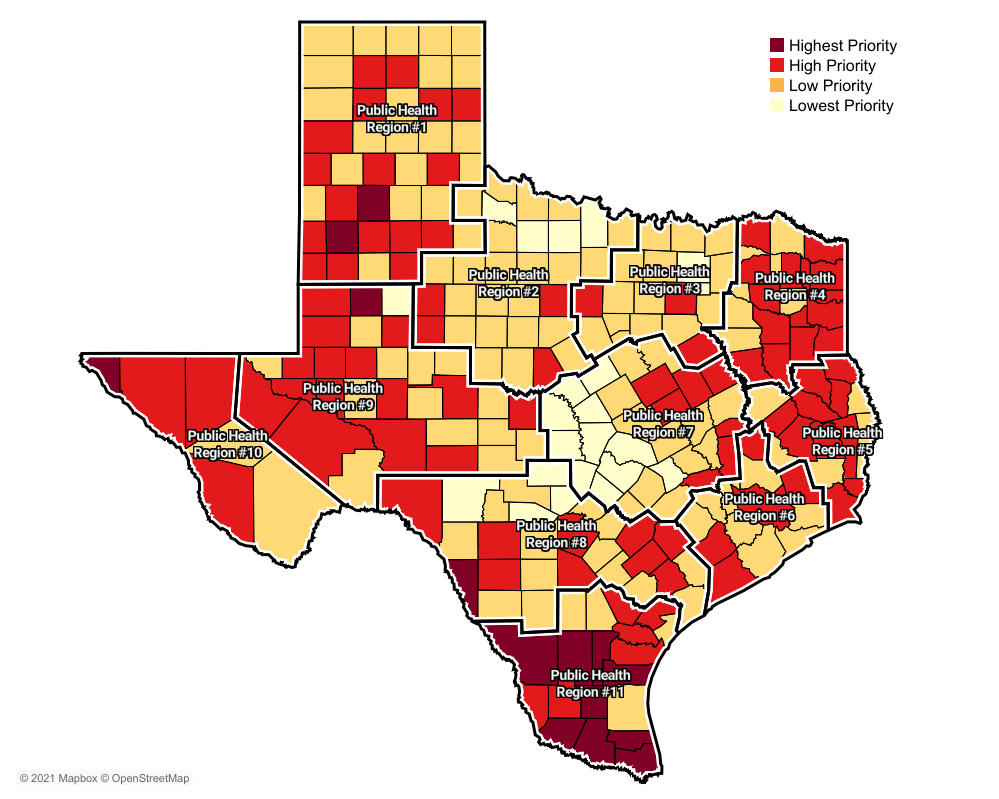
Heat map of the state of Texas showing priority across counties.

Data-Driven Philanthropy During the COVID-19 Pandemic

Background

In 2017 when Hurricane Harvey struck the Gulf Coast of Texas, various funders, even those with limited experience in disaster philanthropy, recognized their obligation to help mitigate the devastating toll of the disaster on Texans and nonprofit partners. One often-overlooked yet critical tool that the Houston-based Episcopal Health Foundation (EHF) leveraged to support the nonprofit and philanthropic community was data and research. EHF used FEMA data to produce maps and analysis to support local efforts and partnered with Kaiser Family Foundation to conduct rapid-response polling to assess the needs of Texans. The data revealed the significant racial, income, and geographic disparities in Harvey’s impact—exposing the need for recovery efforts to be community-specific and equity-focused. Three years later, those lessons remain cornerstones for effective philanthropic responses an unprecedented disaster—the COVID-19 pandemic.

Challenge

On May 6, 2020, Texas Governor Greg Abbott designated OneStar Foundation to manage the Texas COVID Relief Fund—a statewide coronavirus fund to address critical gaps in community resources in the areas of health, education, and community development. In total, the Texas COVID Relief Fund raised $920,000, while more than 1,000 organizations reached out to express a need for funding due to the pandemic.

While the state saw an outpouring of philanthropic support in the aftermath of Hurricane Harvey, the COVID-19 pandemic was different. The virus and its consequences impacted all Texans in almost all countieswhile also impacting almost every corner of the world. Every nonprofit, foundation, small business, corporate donor, and community continues to cope with functioning in the “new normal.”

In response to the overwhelming demand, OneStar prioritized funding for unmet needs of communities that were disproportionately impacted by the pandemic. However, it was difficult to identify exactly which communities these were at the time due to fragmented and inconsistent publicly available data and the diversity of approaches to the local health and economic crisis in each local jurisdiction. OneStar needed to analyze real-time public health data to better see how local communities were impacted differently by the pandemic and identify gaps in local response efforts. OneStar called upon partner organization EHF to conduct a statewide analysis that could identify communities disproportionately impacted by the virus. This data informed critical decisions in the grantmaking process so that finite resources could best respond to the pressing needs of the moment.

The partnership between the OneStar and EHF showcases valuable lessons on the multiple ways data and research can sharpen our ability to respond to complex challenges in the disaster landscape. While philanthropic giving plays an essential role in disaster recovery, the amount of funding a single organization can give to relief efforts was always going to be a drop in the bucket.

Solution

EHF and OneStar worked together to explore publicly available datasets on public health and socioeconomic risk factors. We aimed to objectively identify regions heavily impacted by the virus that were less likely to have sufficient resources to respond to the economic, social, and health challenges posed by the pandemic. Our goal was to create a heat map of Texas by plotting both COVID specific public health indicators alongside resiliency indictors.

COVID-19 Public Health IndicatorsResiliency Indicators
COVID-19 related deaths
COVID-19 related hospitalizations
CDC’s Social Vulnerability Index
Unemployment Statistics
Access to a local philanthropic fund

We used statistical data on COVID-19 related deaths and hospitalizations as opposed to COVID-case numbers due to the variation of testing capacity across counties. To highlight the socio-economic impact of the pandemic, we used unemployment statistics published by the Texas Workforce Commission and the Center for Disease Control’s Social Vulnerability Index. The CDC SVI includes 15 social variables, including poverty, lack of access to transportation, and crowded housing, that identify areas of high socio-economic insecurity. In short, the CDC has identified these 15 factors play into a community’s ability to prevent human suffering and financial loss in a disaster.

We wanted to know which areas of the state were already capable of raising and distributing philanthropic dollars in their communities to find where our funding would be most needed. We knew from the beginning that this data was not readily available, too hard to compile, and inconsistent. Ultimately, we were able to identify local communities with access to a local COVID-19 relief fund using Candid’s database and aggregated that data to the county level to compare across datasets.
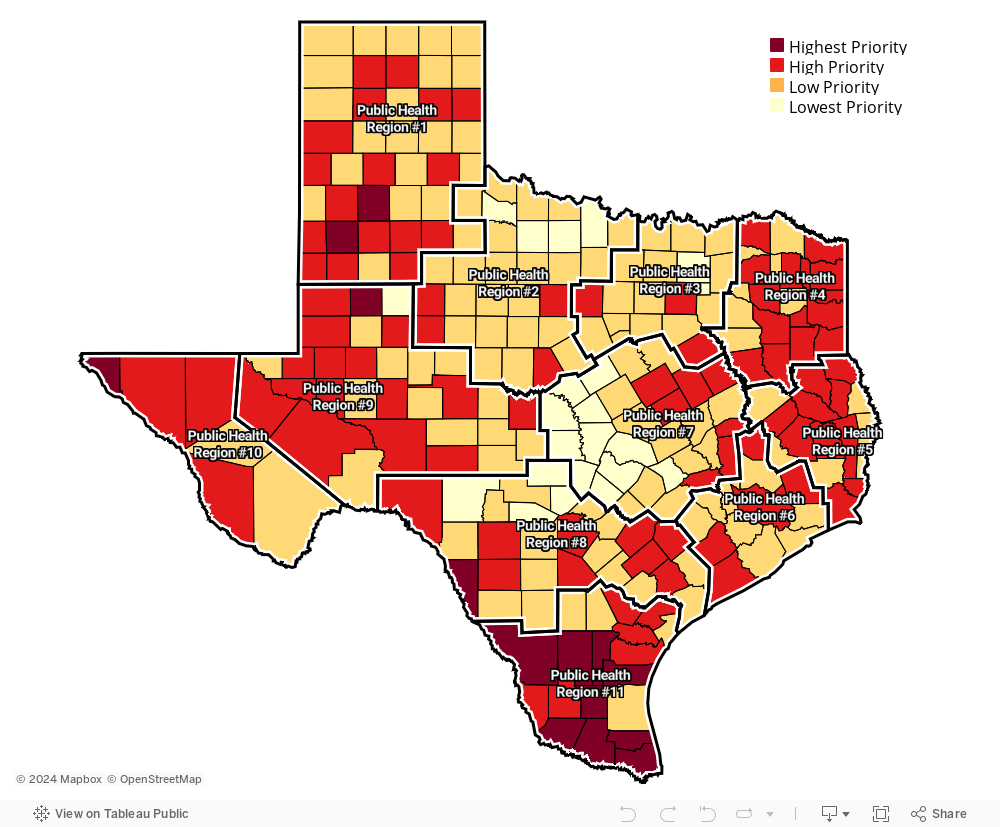
Based on the indicators above, we identified 33 of the 254 Texas counties were highest need (13%), 92 counties were high need (36%), 105 counties were low need (41%), and 24 counties were lowest need (9%). We prioritized funding for regions with large clusters of “highest” and “high” need counties and rural areas with limited access to local COVID philanthropic relief funding. 

Geographic ScopeFunding ApprovedPercentage
Statewide
3+ Regions
2 Regions
1 Region
$485,000
$200,000
$160,000
$75,000
53%
22%
17%
8%
Total Funding$920,000100%

To reach the most people, we knew we needed to focus on providing grants to organizations which had a history of providing services statewide or across a significant proportion of the state. However, the data allowed us to identify and prioritize smaller regional organizations that cover a few highest need regions.

The analysis provided clarity on the impact of the coronavirus regionally. For example, in July, major metro areas like Dallas and Houston had large numbers of COVID-19 cases while smaller counties in the Rio Grande Valley region had higher rates of COVID-19 deaths, unemployment rates almost double the state average, and relatively fewer philanthropic dollars flowing into the region. This was a similar trend we saw during Hurricane Harvey, in which smaller or more rural communities that were most devastated by the storm received less news coverage and with it less philanthropic support compared to the Houston area.

Insights & Call to Action


We must learn from each disaster to better prepare for the next one. The COVID-19 pandemic taught us a few important things about the current state of data-driven philanthropy in Texas. Our partnership on this endeavor allowed us to envision what the philanthropic community could achieve by using research and data as a grantmaking tool. We draw the following insights from our collaboration:

  • The philanthropic sector must increase data transparency.
    Our society is built upon incredible diversity and deeply intertwined systems and issues and unfortunately no dataset can provide a full and complete snapshot of this reality. While data will likely always be imperfect, the more we use, aggregate, analyze, and act on data, the better informed our practices and policies will be. Greater transparency can ensure that government, philanthropic funders, and advocacy groups have a clearer picture of grantmaking to better advocate for and invest in communities. Without information on how much funding was available in certain locations and how it was being distributed in real-time, as a state we are passing up an opportunity to stretch and leverage our finite philanthropic dollars as far as they could go.
  • Data-driven philanthropy can improve equity.
    Foundations who desire to make systematic change focused on equity should use data to inform their grantmaking practices and policies, including funding research and evaluation in line with direct services. Research and evaluation can have systemic, community-wide policy impacts when used correctly to inform decision makers. We use research methods to evaluate which programs can successfully be scaled and replicated. However, many nonprofits do not have the time or budget to conduct regional or community-wide impact evaluations—a critical gap that philanthropy can help address.

Data can help us see which communities geographically and demographically are most in need. From data analysis on Hurricane Harvey and COVID, we now know that urban communities draw more attention and donations following a disaster. We can use that information to distribute funding more equitably to regions that are underserved and under resourced. The disparate impact of the COVID pandemic on African American and Hispanic communities was not readily known until we had data to show it. If done correctly, data shows us who, where, and in what way communities are most in need.

Closing


One day we hope to see an interconnected network of funders who collaborate in real-time by

  1. collecting usable grantmaking data;
  2. making data discoverable online and openly shared;
  3. discussing best practices for using data;
  4. identifying gaps in funding to better leverage dollars.

Research and data-driven grantmaking is one way we have the power to increase equity and demonstrate our resolve to support our communities in need. The Episcopal Health Foundation and OneStar Foundation teamed up to share our experience to start a larger conversation amongst our sector. We encourage you to reach out to us to continue the conversation on how to improve research and data-driven philanthropy in the nonprofit sector.

Robiel AbrahaRobiel Abraha
Research and Evaluation Officer
Episcopal Health Foundation

Megan MaldonadoMegan Maldonado
Program Manager, Rebuild Texas Fund
OneStar Foundation

Read More:

 
  • Texans’ Views On The COVID-19 Pandemic. (Published October 2020) The Episcopal Health Foundation conducted a statewide survey of Texans on the impacts of the COVID-19 pandemic. The report highlights how the pandemic is affecting Texans differently depending on household income, race, whether they have health insurance, and many other factors.
  • The Impact of COVID-19 on Texas Nonprofits. OneStar Foundation and the United Ways of Texas developed, executed, and analyzed nonprofit surveys to identify the impact COVID-19 has had on the nonprofit sector in Texas.
  • The Center for Disaster Philanthropy, a thought leader in disaster philanthropy, and Candid released Philanthropy & COVID-19 in the First Half of 2020 report detailing global giving trends.
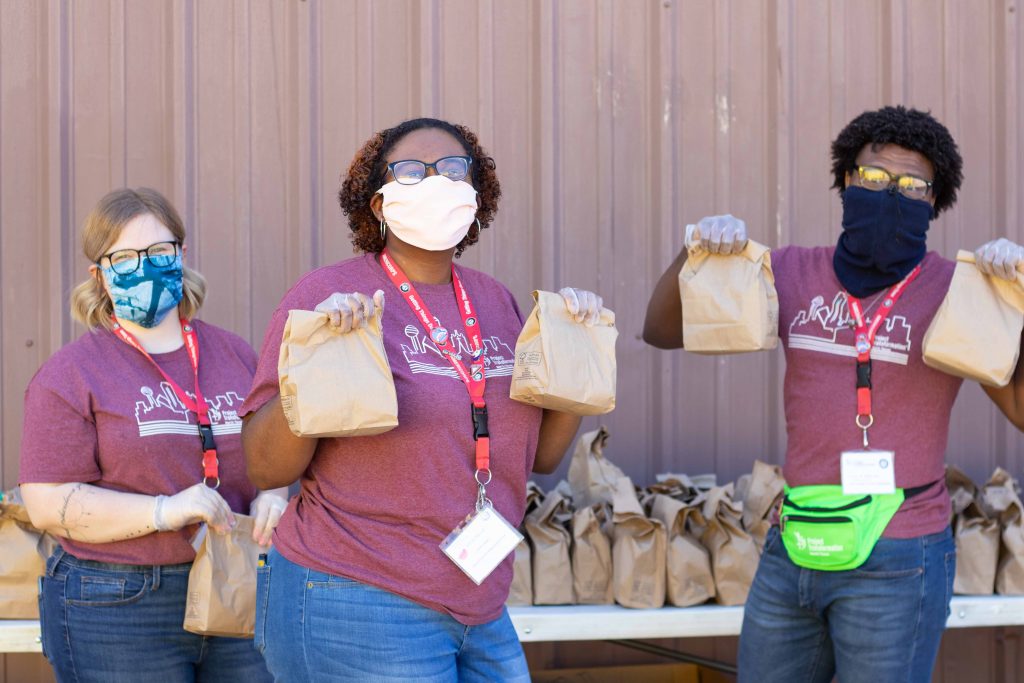
Three AmeriCorps members wearing cloth facemasks hold up brown bags during a meal distribution.

#ServiceShoutout to 9 AmeriCorps Texas Programs Supporting COVID-19 Recovery

Today, we’re joining the nationwide #ServiceShoutout celebrating the invaluable role that national service has played in COVID-19 recovery. Texas communities are stronger and more resilient because of their commitment and dedication.

With 17,900 national service members serving across the state, there are countless examples of how AmeriCorps is making a difference across our state. Here is a look at nine AmeriCorps programs and how they have adapted this year in response to our communities’ pressing needs.

  • ChildFund International AmeriCorps members have helped children and families throughout Texas protect themselves from COVID-19 and supported students’ social emotional learning through virtual lesson plans, video presentations, and curbside activities. Members conducted home visits and check-in calls with families, provided tips on helping children manage stress and stay safe, gave encouragement, and provided a listening ear. Here’s an example of one fun virtual activity that members used to keep students safe and engaged!
  • College Advising Corps has diligently supported students across Texas navigating the uncertainty caused by COVID-19, ensuring they do not lose valuable post-secondary opportunities. AmeriCorps members continued offering advising services by pivoting to teleservice. For example, AmeriCorps members utilized SMS texting capabilities as an outreach method; at The University of Texas at Austin, advisers collectively texted more than 1,000 students to continue distributing important college-going information. Check out our in-depth profile of the College Advising Corps response here!
  • Communities In Schools of San Antonio was a lifeline for thousands of kids affected by COVID-19 and the economic fallout. AmeriCorps members supported student engagement in virtual learning by doing porch visits, providing technology, and offering enrichment groups over Zoom. But beyond academic support, members also served more than 250 hours at weekly mobile food pantries, rotating between 18 schools to meet the urgent need for food assistance. Check out how Communities In Schools used their unique case management model and community connections to address the unprecedented needs of their students.
  • Girl Scouts of Northeast Texas has been delivering virtual programming during the COVID-19 pandemic that is exceeding expectations of parents and teachers. AmeriCorps members have conducted online workshops for 3,000 girls—from a six-week virtual Camp Out of the Box experience to the Okay to Say mental health education program. Girl Scouts collaborates with local school districts to ensure students continue to build social/emotional skills, participate in hands-on STEM activities, and develop mental health awareness during the COVID-19 shutdown. Check out how Girl Scouts of Northeast Texas helped kids learn science—even without the Internet.
  • Imagine Art in Austin provided support to their client base of artists with disabilities by pivoting to online platforms and developing extensive safety protocols during the pandemic. AmeriCorps members explored creative exhibition opportunities for local artists via digital galleries and outdoor venues throughout the community, and they delivered food, personal protective equipment, and art supplies to clients upon request. Here’s a peek at their latest exhibition, curated and installed by AmeriCorps members!
  • Legacy Community Health has been working diligently to meet the needs of their patients and the Houston community. AmeriCorps members assist patients with their social determinants of health to ensure they have access to COVID-19 resources and have supported contact tracing, various food distributions, and Legacy Community Health’s baby shower parade for expecting moms. Check out our in-depth profile of the Legacy Community Health response here!
  • Literacy First in Austin recognized how the COVID-19 pandemic exacerbated long-standing disparities in access to a quality early education: their students were at greater risk of learning loss and needed additional early literacy support. AmeriCorps members were trained to effectively support and monitor student progress via Zoom and have provided hundreds of students with daily, one-to-one virtual tutoring. In addition to their tutoring responsibilities, Literacy First AmeriCorps members have also served the Central Texas community during the pandemic as COVID-19 contact tracers, food bank volunteers, elder support volunteers, virtual summer school support, and more.
  • Project Transformation North Texas continued to engage students throughout the COVID-19 pandemic with their PT@Home virtual video series, featuring literacy, STEM, art, social-emotional learning, and other supply-light educational activities that kids could join remotely. In addition, AmeriCorps members helped deliver more than 47,000 meals across nine sites in the north Texas area and hosted drive-through food and supply distribution with toys, cleaning supplies, and meal kits. After months of hosting after-school homework help, literacy assessments, and family fun nights over Zoom, this AmeriCorps program is supporting local public and charter schools as they reopen with in-person programming using extensive safety protocols.
  • Reading Partners North Texas kept summer reading alive through the pandemic by engaging AmeriCorps members to distribute reading materials to 540 students during summer 2020. The program adapted its literacy curriculum for a virtual environment: they created Reading Partners Connects, a one-on-one online tutoring platform, and offer a free digital library for students and families. Here’s a look at a day in the life of an AmeriCorps distance tutoring coordinator.

Take Action on VolunteerTX

While Texas communities have faced extraordinary challenges over the past year, we have also witnessed extraordinary kindness and compassion as Texans took action to support their neighbors. As we celebrate the impact of volunteer service this National Volunteer Week, we are excited to announce the launch of VolunteerTX, a website where you can connect with ways to give back in your community. VolunteerTX is our first statewide online hub for volunteering and lists more than 2,000 volunteer opportunities across Texas, so you can explore new causes and organizations that inspire you!

Here are few ways that VolunteerTX makes it easy for you to serve:

  • VolunteerTX allows you to filter volunteer opportunities by geography, issue area, skills/interests, commitment level, and more!
  • Volunteering during the COVID-19 pandemic while adhering to public health guidelines has been a challenge, so nonprofits have adapted by developing ways for volunteers to serve remotely. But as vaccines are distributed and the risk of social activities decreases, you also may be interested in exploring opportunities to safely volunteer in-person. VolunteerTX provides a convenient way to find both remote and in-person opportunities appropriate for your comfort and risk level.
  • AmeriCorps brings people together in service—harnessing the passion and enthusiasm of everyday Texans to tackle some of our state’s toughest challenges with hands-on solutions. AmeriCorps members commit their time to serve long-term with nonprofits, government agencies, and faith-based & community organizations, while also receiving a stipend, education award, professional development opportunities, and other benefits. If you want to serve while also advancing your career, check out VolunteerTX for opportunities to serve with AmeriCorps in Texas.

VolunteerTX compiles volunteer opportunities from national organizations as well as local volunteer centers, including:

These organizations have built strong ties with nonprofits in their local community, and VolunteerTX amplifies their work and opens up their listings to new and diverse volunteers across the state. If you are interested in posting volunteer opportunities on VolunteerTX, contact us via the Become a Partner form found at the bottom of the VolunteerTX homepage. We can connect you with a current partner in your area or discuss how to become a volunteer center yourself.

Hometown Hero: Faye Watson Continues a Family Legacy of Service in Wharton County

After spending more than three decades in the world of corporate compliance in Houston, Faye Watson was preparing for quiet retirement in her hometown of Wharton, but Mother Nature had other plans. In the disaster-prone Gulf Coast of Texas, Faye found a new calling with Wharton County Recovery Team, a group of community organizers who assist local recovery and rebuilding efforts.

“The most fulfilling part of this role is seeing a community—my community—rebound from not only Hurricane Harvey, but three floods prior to Hurricane Harvey in a two-year period,” Faye said. “Many lived in homes that were built in the 1930s. They are a resilient people, but the devastation and frustration had really worn the residents of the West End down.”

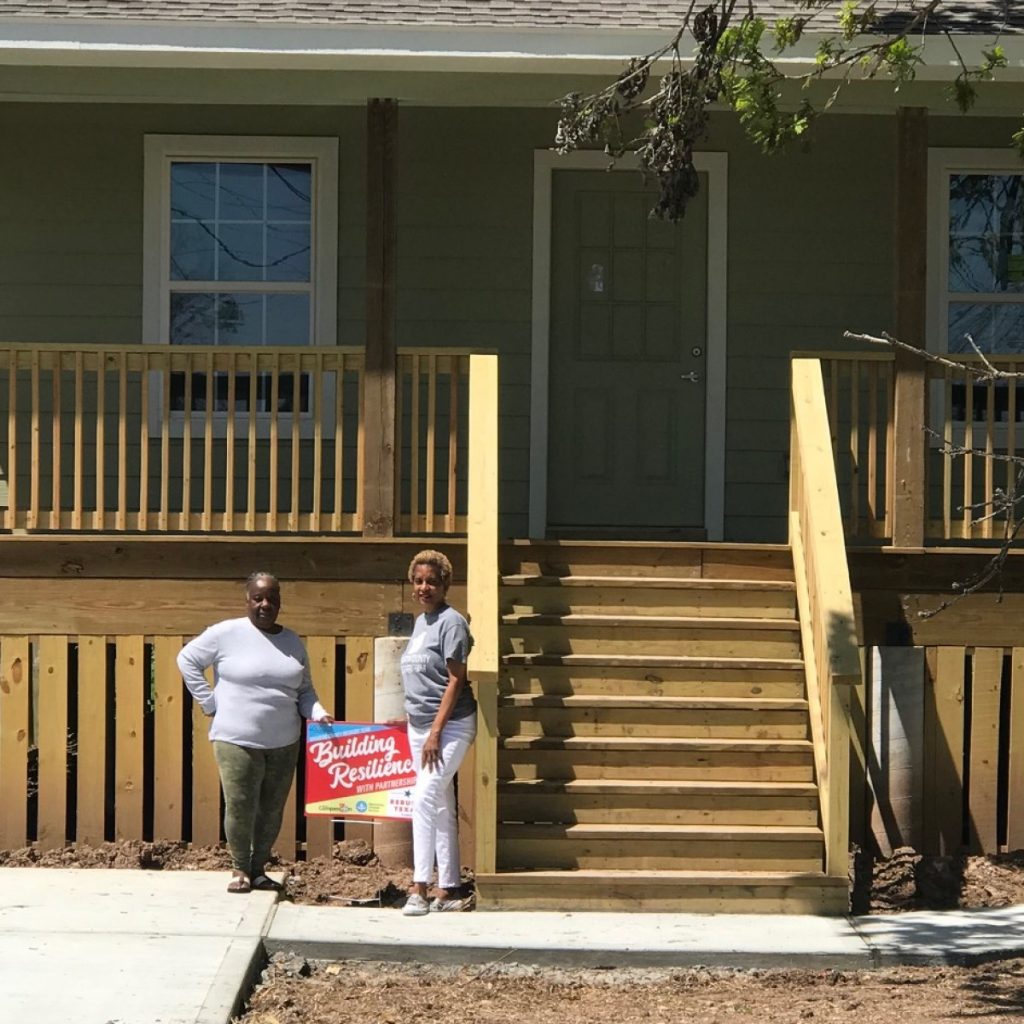
In 2018, Wharton County Recovery Team (WCRT) received $1.4 million from OneStar’s Rebuild Texas Fund that funded the construction of 10 homes on Wharton’s West End for displaced families—some whom had been without permanent residence for more than three years. The group has built a total of 24 houses for Hurricane Harvey survivors and has overseen more than 300 repair and rebuilding cases. Throughout the journey, WCRT has built trust with the community to ensure critical needs are met.

“Those in most need of assistance may not be aware of the services that are available. Communications are key to ensure these individuals do not fall between the cracks,” reported the team.

Serving with WCRT was an indispensable opportunity for Faye to give back to her hometown and honors the legacy of service passed down by her family. Both of her parents were raised in Wharton: her father was a military veteran and engineer, and her mother was a homemaker with a heart for the community.

“My mother was a community activist before she even knew what activism was,” Faye said.

Having paved the way for new homes for so many families, Faye has plans build a home of her own and is still eyeing a retirement in Wharton—if Mother Nature allows.

“I’m waiting for the levee to be built in Wharton, in hopes that I won’t be required to build six feet off the ground and be required to walk up a flight of stairs when entering and leaving my home,” Faye joked.

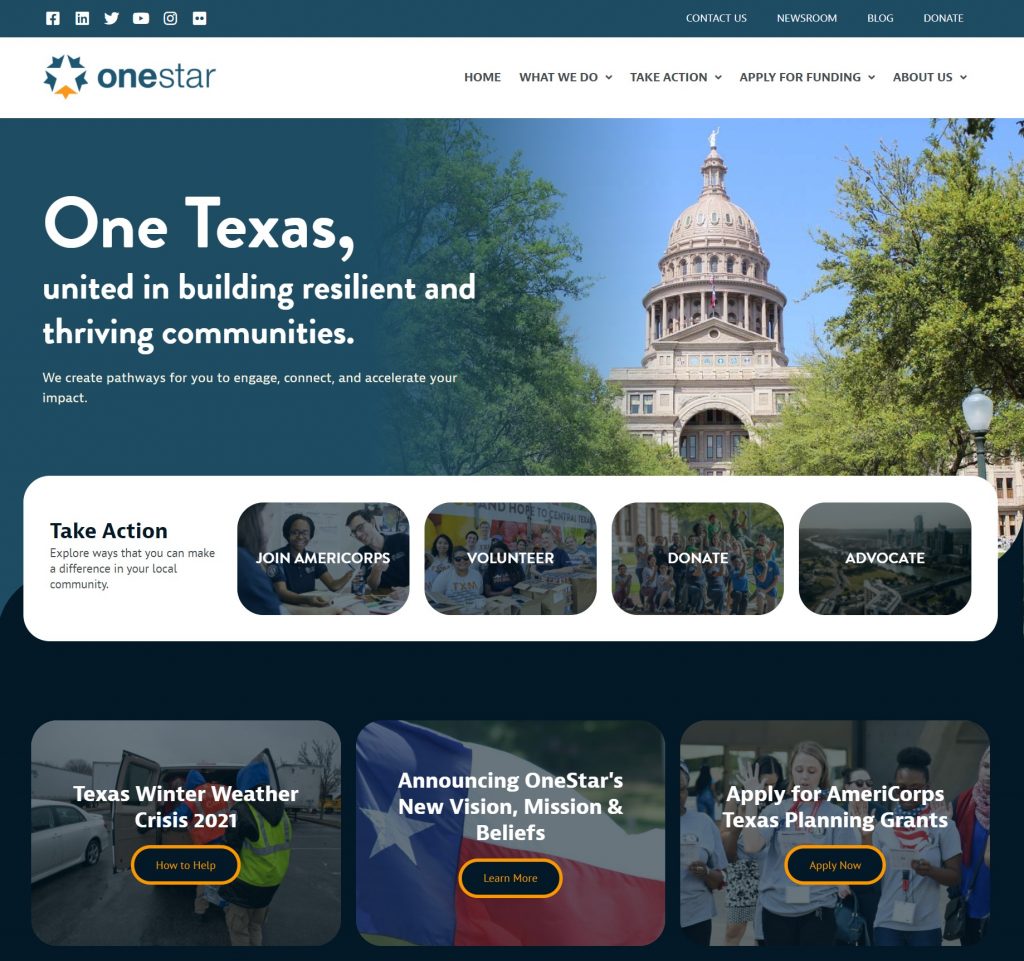
Screenshot of OneStar website

Creating Pathways with the New OneStar Website

A website is a showcase of an organization’s identity and a gateway to a deep and meaningful understanding of its core purpose. Last year, OneStar announced a new mission statement centered on strengthening communities by creating pathways for Texans to engage, connect, and accelerate their impact. Realizing our online presence needed to reflect this commitment, we have relaunched our website at onestarfoundation.org to serve as a portal for you to find opportunities to take action.

We believe that everyone has a role to play in building resilient and thriving Texas communities, so we often serve as a bridge—across sectors and between individuals and organizations, each with varying needs. Our new site features robust site navigation that provides a clear overview of the scope of OneStar’s work and makes it intuitive for you to find resources relevant to your important work for Texas.

We invite you to explore the new website and discover how we can work together to build stronger Texas communities. Here are a few key features that you can look out for:

  • Mobile-responsive. As of 2016, the majority of web traffic worldwide has come from mobile devices. To accommodate to this trend, we made it a priority to build a responsive website that adapts to your phone and tablet, allowing you to access information and resources while on the move.
  • Calls to action. OneStar wants you to get involved: to join AmeriCorps, volunteer in your community, donate to support our work, and advocate for the nonprofit sector. We have made these activities easily accessible from anywhere on our website. Also be on the lookout for the blue and gold buttons prominently featured at the top of each webpage that make it clear how you can engage with our programs.
  • Categorized blog. The new OneStar blog is organized by category, allowing you to find posts related to your interests. Our goal over the coming year is to share timely stories of inspiring individuals and organizations serving in Texas communities and ways you can take action for our fellow Texans.
  • Grantee directories. We promote AmeriCorps as an effective solution to our state’s toughest social challenges and hope to better highlight the incredible scope and impact of national service programs in Texas. On our new website, we have created dedicated profile pages for each our AmeriCorps Texas grantees and AmeriCorps VISTA host sites, organized in searchable directories that can be filtered by focus area and geography. This makes it easy for you to find local AmeriCorps programs of interest to you. You can also explore the impact of funding from our Rebuild Texas Fund, which supports the recovery and rebuilding of Texas communities impacted by natural disasters.

We are grateful to the OneStar staff and stakeholders who shared experiences and insights that shaped the new website, and our special thanks to the talented team at HMG Creative for turning this vision into reality!

Our new website went live on Wednesday, March 17, and we appreciate your patience and feedback during this launch phase. Please feel free to contact me with ideas for how we can continue to improve our online platform, and we look forward seeing how the new website can support your work in the years ahead!

Joshua WinataJoshua Winata
Communications Officer

Nicholle Gotham

Meet Nicholle Gotham, Center for Nonprofits & Philanthropy | VISTA Spotlight

In our VISTA Spotlight, our OneStar AmeriCorps VISTA members share in their own words about the transformative experience of serving with nonprofits and agencies in Texas working to eliminate poverty.

During college, I spent my senior year interning at my local National Public Radio station and loved every minute of telling the stories the lives of my neighbors throughout Northern New York. It was during my spring semester that the COVID-19 pandemic began and abruptly ended my college career. As someone who had always planned on attending law school, all my plans went out the door as I began to wonder what my post-grad life would look like.

I have always had a passion for working on behalf of my community, so this influenced me to eventually decide to take a gap year as an AmeriCorps VISTA. I knew that I wanted to spend my time in a location that was totally different from Northern New York along the Canadian border where I had grown up and attended St. Lawrence University, so I began looking at opportunities around the nation. I eventually found an opening with the Center for Nonprofits and Philanthropy (CNP) with the The Bush School of Government and Public Service located at Texas A&M University and loved the idea of working to bring together nonprofits throughout the community.

During my time with CNP, I have worked with community members and alumni of the university to share amazing, heartfelt stories about how they are making an impact in their local communities and helping change the lives of those around them for the better. Getting to share these stories allowed me to go back to my roots of storytelling that I fell in love with during college and highlight the inspiring work that is being done in the world all around us. I’ve really taken a lot of time to reflect on the work that I’m doing on behalf of the community in Bryan/College Station through the process of highlighting so many diverse and interesting voices, and I’m so excited to look back and tell stories of my own experience with the same passion and integrity that the folks whose stories we’re working on sharing with the Texas A&M community and beyond.

As the end of my service nears in August, I’m still planning on attending law school. However, my experience as a VISTA has solidified my interest in working in the public sector, and I hope to continue working to help folks in my career every day. I’ve been influenced by all of those in the Brazos Valley community working at local nonprofits to make the lives of people in the community better and would love to someday operate a legal organization to help folks who are survivors of domestic and sexual assault to receive the legal guidance and assistance that they may need but are unable to attain. There is so much that we can do for our community—on both big and small levels—that can make even the slightest difference in the quality of life for someone, thus improving their lives. It really is amazing seeing this work being done, and I’m extremely inspired to continue my service that’s aiding this community. This work has planted seeds of hope within me concerning the service work that I plan to do throughout my life.

Community Through Connection: AmeriCorps Texas Grantee Meeting, March 10-12, 2021

Community Through Connection | 2021 AmeriCorps Texas Grantee Meeting

As we have remained socially distanced while navigating the effects of the COVID-19 pandemic, one insight rings true: we need connection to keep our communities strong. That’s why OneStar moved our annual AmeriCorps Texas Grantee Meeting—held March 10-12, 2021—to an online format, giving our national service programs a virtual space to continue building relationships and share experiences from this extraordinary year.

The theme of this year’s event was Community Through Connection, which gave us the opportunity to celebrate creative ways that AmeriCorps Texas programs stepped up this past year to address pressing community needs in compassionate and personal ways.

Here are a few memorable highlights from this year’s AmeriCorps Texas Grantee Meeting:

  • Going virtual. After months of online video conferences, we had to get creative to keep participants engaged. We used tools such as breakout rooms, polls, and annotation, which created an opportunity for connection and engagement outside the traditional webinar format.
  • Organizing affinity groups. This year, we offered sessions targeted to specialized affinity groups, with tracks for fiscal grants management, recruitment, and member management and engagement. This allowed us to tailor content to relevant audiences, provide more opportunities for sharing challenges and best practices, and deepen engagement around critical topics.
  • Amplifying program voices. AmeriCorps Texas Grantee Meeting is an opportunity for our programs across the state to connect with one another. To facilitate peer learning, we intentionally structured the majority of our sessions as panel discussions, spotlighting the practical, real-world perspective of experts working on the front lines. We invited grantees to present on a range of topics, from leadership development and member onboarding to program income and Fixed Award grants.
  • Leading beyond compliance. While AmeriCorps Texas Grantee Meeting offers a lot of technical training and assistance, we know that running a successful and thriving AmeriCorps program requires more than just checking the boxes. That’s why we invited Tray Deadwyler from Think for Good to offer a keynote address on Leading Beyond Compliance: Courage, Connection, Communication, Connecting the Dots. Tray shared some incredible methods for building connections, providing useful feedback, and coaching for success. He walked us through a motivational analysis where he asked participants to assess our “why” in order to determine our primary leadership style. Tray reminded us that to be effective leaders, we must strengthen our relationship and goal-oriented behaviors. We can do this by remembering to “seek first to understand, before seeking to be understood.” Tray taught us methods for providing effective feedback. One of my biggest takeaways was how intentional, thoughtful communication breeds connection.
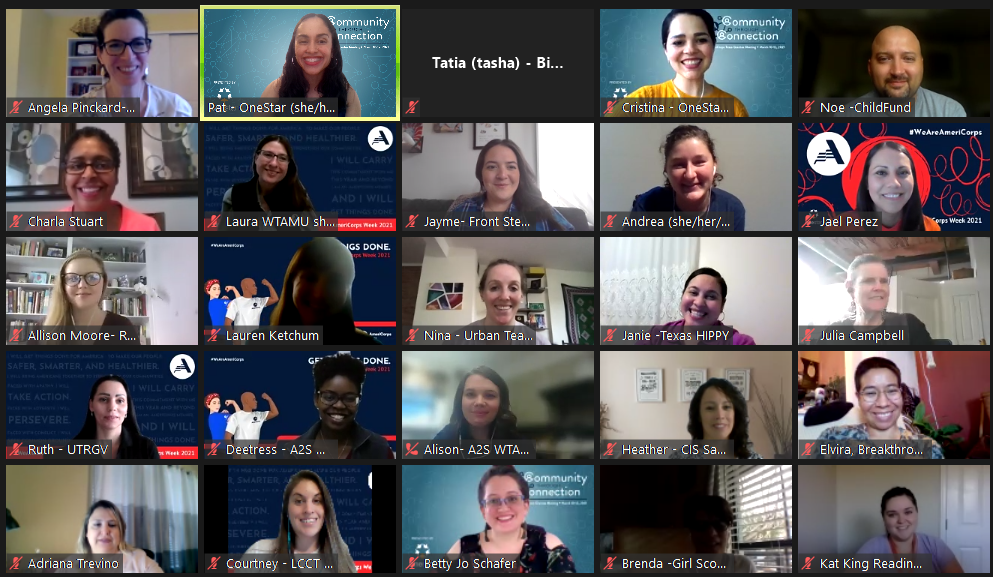
Screenshot of Zoom meeting
AmeriCorps Week 2021 | March 7-13 #WeAreAmeriCorps

Celebrating AmeriCorps Week 2021: We Are AmeriCorps

Between the COVID-19 pandemic, the Texas winter weather crisis, and the far-reaching effects of these unprecedented situations, this past year has been an extraordinary one. During these challenging times, AmeriCorps has played an essential role in meeting heightened community needs. Our AmeriCorps members show us how strong and resilient we are when we come together and are a shining example of how to serve our fellow neighbors.

This March 7-13, we celebrate AmeriCorps Week to recognize the impact of our programs and extend our appreciation to the more than 3,400 AmeriCorps members serving in Texas this year. Here are a few ways that you can participate in AmeriCorps Week!

1. Say thank you to your AmeriCorps members and alums

Say thanks to your AmeriCorps members and alums by sharing videos, photos, and posts on your social media channels recognizing the powerful imipact they have in your organization and community. You can use the hashtag #AmeriThanks throughout the week, and you are especially encouraged to participate on a nationwide tribute on Thursday, March 11, using the hashtag #ThankfulThursday. Download sample social media posts, shareable GIFs, and a special AmeriCorps Week video tribute here.

2. Share stories of service

Share stories about your AmeriCorps members’ service experience with videos, photos, and posts on social media. You are invited to take part in the national #WeAreAmeriCorps campaign by including how your impact is a part of the national service movement! You can also submit a story about your service experience on americorps.gov.

3. Use our virtual backgrounds

Many AmeriCorps members are conducting their service virtually through Zoom and other video conferencing services. We encourage programs to use these fun custom AmeriCorps Week virtual backgrounds to commemorate this special time. They also make for colorful group photos!

Click to download

Virtual Video Background - Rosie & Rick - Get Things Done - AmeriCorps Week 2021

Virtual Video Background - Circles and Spirals - AmeriCorps Week 2021

Virtual Video Background - AmeriCorps Pledge - AmeriCorps Week 2021

Jessica Enriquez

Meet Jessica Enriquez, Communities In Schools of Central Texas | VISTA Spotlight

In our VISTA Spotlight, our OneStar AmeriCorps VISTA members share in their own words about the transformative experience of serving with nonprofits and agencies in Texas working to eliminate poverty.

During my senior year at St. Edward’s University as an English Literature major, I had the opportunity to apply for a paid internship with the Partnership Department of Communities in Schools in Central Texas. I was preparing for what was sure to be the most stressful semester of my academic career and at the same time, the most exciting. I was writing my thesis on the “Dualistic Perceptions of Guinevere in Sir Thomas Malory’s Le Morte Darthur” and felt immersed in that literary world which I admired and desired to belong to.

I must say that my “encounter” with Communities in Schools—and therefore, with the nonprofit sector—was not initially due a natural-born desire to serve my community as perhaps many of my fellow VISTA members have experienced. My encounter with Communities in Schools was, in a way, accidental. I remember during my interview with my current supervisor, I was asked how (or if) I thought my work at CIS would connect to my aspirations and work as a writer. At that moment, I responded that much of what I wrote was about the human experience and that I believed it corresponded (in a way) to the role I would be performing as an intern in the Partnership Department.

After more than a year of serving our CIS families in various positions, I am now as a VISTA for the Basic Needs Department. I can wholeheartedly say that my experience as part of this community has helped me develop as a professional in ways I never imagined. When I think of myself as a writer now, I do not think only of my poems; I think of the ways my skills can help underserved communities. For instance, as part of my role, I have had the privilege of providing Spanish translation for several of our documents, and I am a huge advocate for Spanish/bilingual outreach. In the future, I would love to continue serving to increase the engagement of our Spanish-speaking parents and increasing their awareness and education of the different resources available for them!

Texas Winter Storm 2021: How You Can Help - Ways that you can donate or volunteer to support Texas recovery

Winter Storm 2021: How to Help Texans Recover

Last updated March 12, 2021

The massive winter storm that swept through Texas this February brought statewide devastation in the form of lethally cold temperatures and widespread power outages and water shortages. While the freezing weather and icy conditions have eased, the journey to recovery has only begun for the millions of affected Texans who have lost basic resources—shelter, food, water, heat—and endured costly damages. If you are seeking opportunities to help vulnerable Texans recover, we’ve rounded up a few ways that you help. Check back for new opportunities updated daily!

If you have additional ways for people to give or volunteer to support Texas recovery, please complete this form to submit your resource. If you or someone you knows requires immediate relief assistance, please dial 211 or visit 211texas.org.

Where to Give

Texas Emergency Management Council Nonprofit Members

Established by the Governor of Texas to advise and assist in all matters relating to disaster preparedness, response, and recovery, the Texas Emergency Management Council coordinates the use of state resources to respond to during major emergencies and disasters and addresses requests for assistance that cannot be resolved at the local level.

  • American Red Cross 
    Donations enable the Red Cross to prepare for, respond to and help people recover from this disaster. This includes providing food, shelter, relief supplies, emotional support and other assistance.
  • Salvation Army of Texas
    Monetary donations are the best way to support the ongoing work of The Salvation Army and provide the flexibility to quickly and efficiently meet immediate community needs. Donations will be used to provide food boxes, hot meals, blankets, shelter, emergency financial assistance and more to those impacted by the cold weather.
  • Texas Voluntary Organizations Active in Disaster
    Texas VOAD is a membership-based nonprofit association that brings together more than 50 voluntary organizations that respond to disasters as a part of their overall mission. Texas VOAD member organizations are actively supporting, and will continue to provide support to, disaster-impacted communities throughout the State of Texas. Check out the full list of Texas VOAD members accepting financial donations on their website here.
Local Relief Funds & Nonprofits

Local Long Term Recovery Groups

A Long Term Recovery Group (LTRG), also known as recovery committees or organizations, are groups that organize the money, people power, and materials that help a community recover from a disaster. It is a collaborative network of individuals, businesses, faith-based & community nonprofit organizations, philanthropic funders, and other recovery partners. LTRGs work in close collaboration with local government. Find a local LTRG to support here.

Where to Volunteer

Texas Voluntary Organizations Active in Disaster 

Texas VOAD is a membership-based nonprofit association that brings together more than 50 voluntary organizations that respond to disasters as a part of their overall mission. As Texas continues to engage in cleanup and recovery activities from the February 2021 Winter Weather Event, volunteer interest and support will be a critical resource needed for the weeks and months ahead. Find Texas VOAD member organizations seeking volunteers on their website here.

Volunteer Centers

.Check your local volunteer center for open opportunities to get engaged in your community